

Silent
The child looks at the next desk, sees nothing yet, and sits very still. The teacher moves on and the child misses the task.
Ages 3 to 6 · Classroom English
Gentle practice of the English used in the classroom: following instructions, asking for help and saying what you mean.
Admissions preparation has its own page.
Three of our tutors who start English conversation at the child's own pace.
Hannah
Conversation, EIKEN and primary English
A gentle, easy-to-talk-to manner that helps children who are new to English, or unsure, begin to speak a little at a time.
View tutor profile →
Faye
English conversation, School English support
Grew up in the United States. Lessons begin with conversation, so that saying first English words feels enjoyable.
View tutor profile →
Nikko
Conversation, EIKEN, IELTS/TOEFL & school English
Works in both English and Japanese, from preschool age to adults, with Japanese explanations when they help.
View tutor profile →These are some of Petra's tutors. We suggest a tutor after hearing about your child's age, where you live and what you hope for, and checking who is free. Availability changes through the year, so do get in touch.
These are common worries before a child's first term.
Understanding an instruction without watching everyone else is a skill of its own.
Parents wonder whether their child will say "I need the toilet" or "I don't understand".
Taking turns and asking to borrow something are small chats that need words.
Responding to an instruction is a different skill from singing or reading a picture book.

We care more about whether a phrase works in a real moment than about perfect grammar. In lessons each one is paired with an action or a picture.
| Phrase | What it helps a child to do |
|---|---|
| Please put your book away. | Listen and act on a teacher's instruction |
| Can you help me? | Ask for help when stuck |
| I don't understand. | Say plainly that something is unclear |
| Can I try? | Show that you want to join in |
| I need a break. | Tell an adult when tired or upset |
| It's my turn. | Take turns with a classmate |
| Where is the toilet? | Ask for something important without embarrassment |
| Can I have some water? | Ask for a physical need |
These examples were written for this page. They are not any particular school's instructions.
A child does not need to start speaking at once. We move through the stages one at a time.
| Stage | What the child does | Lesson example |
|---|---|---|
| 1. Listen and move | Follows the teacher's gestures and the room, even without knowing the words | Hears "Stand up" and "Sit down" with actions |
| 2. Understand and move | Understands the words alone | Hears "Put your book away" with no demonstration |
| 3. Answer in a word | Reacts briefly: "Yes", "No", "Me!" | Answers "Do you want to try?" in one word |
| 4. Ask for what you need | Asks for help or a break unprompted | Uses "Can you help me?" and "I need a break" in different situations |
| 5. Talk to a friend | Takes short turns in conversation | Uses "It's my turn" during pretend play |
The stages are a guide. Many children move back and forth between them.
In these examples the tutor plays the teacher and your child plays a pupil. Switch tabs to see them.
Examples written for this page (not a real child's session)
Listening to an instruction and acting on it, with everyday things.
A small, safe problem makes asking for help natural.
Two soft toys practise taking turns and asking to join in.
We adapt to your child and the day. These examples are not a promise of results.
This page is for children joining a school or early years class in Japan where day-to-day instructions are given in English.
International schools, English-medium early years classes and English-immersion kindergartens, where the teacher's instructions are in English.
Japanese-medium nurseries, kindergartens and schools. English lessons for those children have their own pages.
Many schools provide English as an Additional Language (EAL) support. Our lessons add to it and do not replace it. Whether they are needed at all depends on what your school provides.
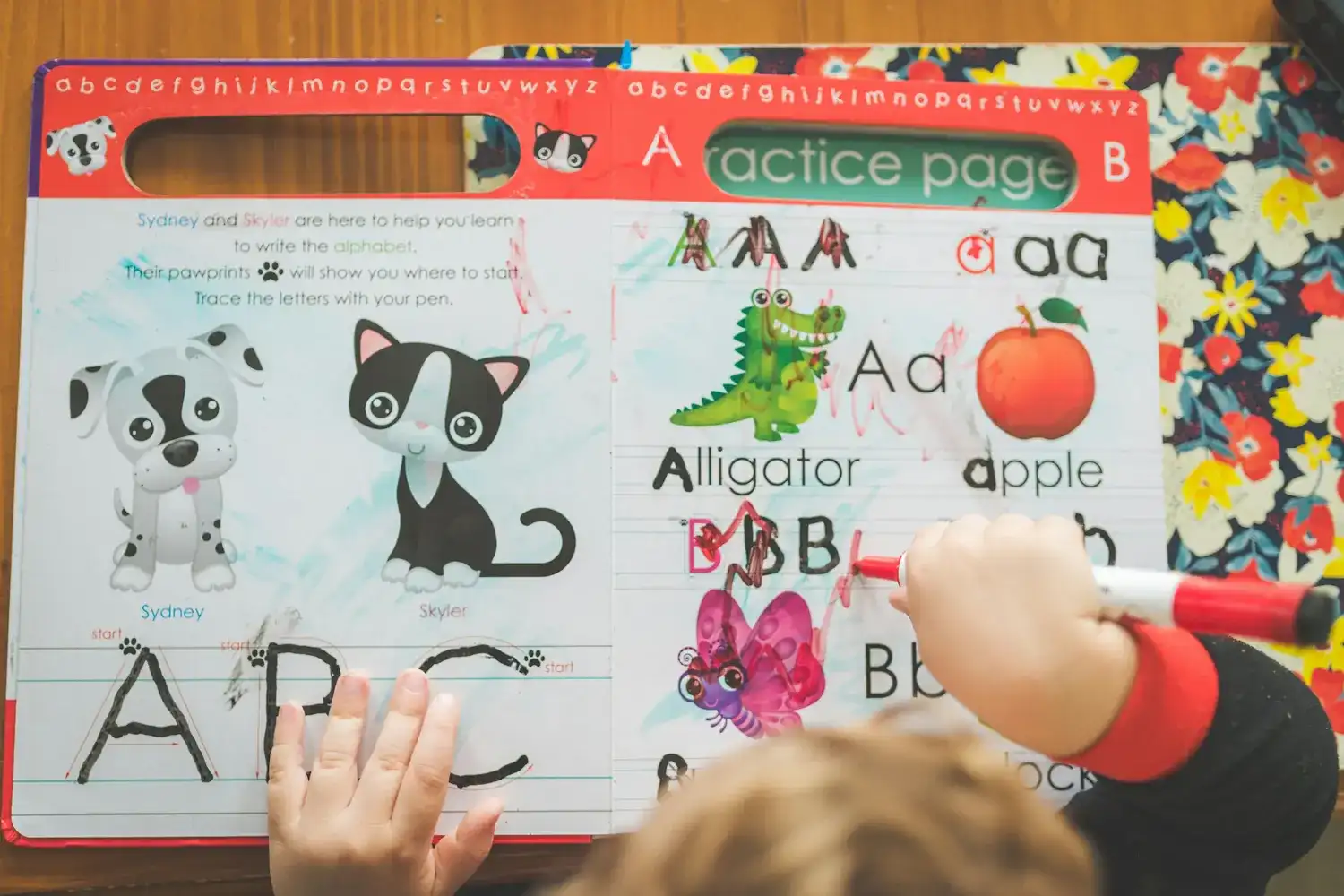
This is one example. We adjust it to the start date and your child.
The morning gathering, toilet, lunch: we look at the flow of a day together.
From the list above, three or four phrases your child is most likely to need.
A pretend classroom lets your child listen, act and say something.
After the start, you tell us what you notice and we adapt.
A child does not need to learn many words in advance. Language grows quickly once the days begin.
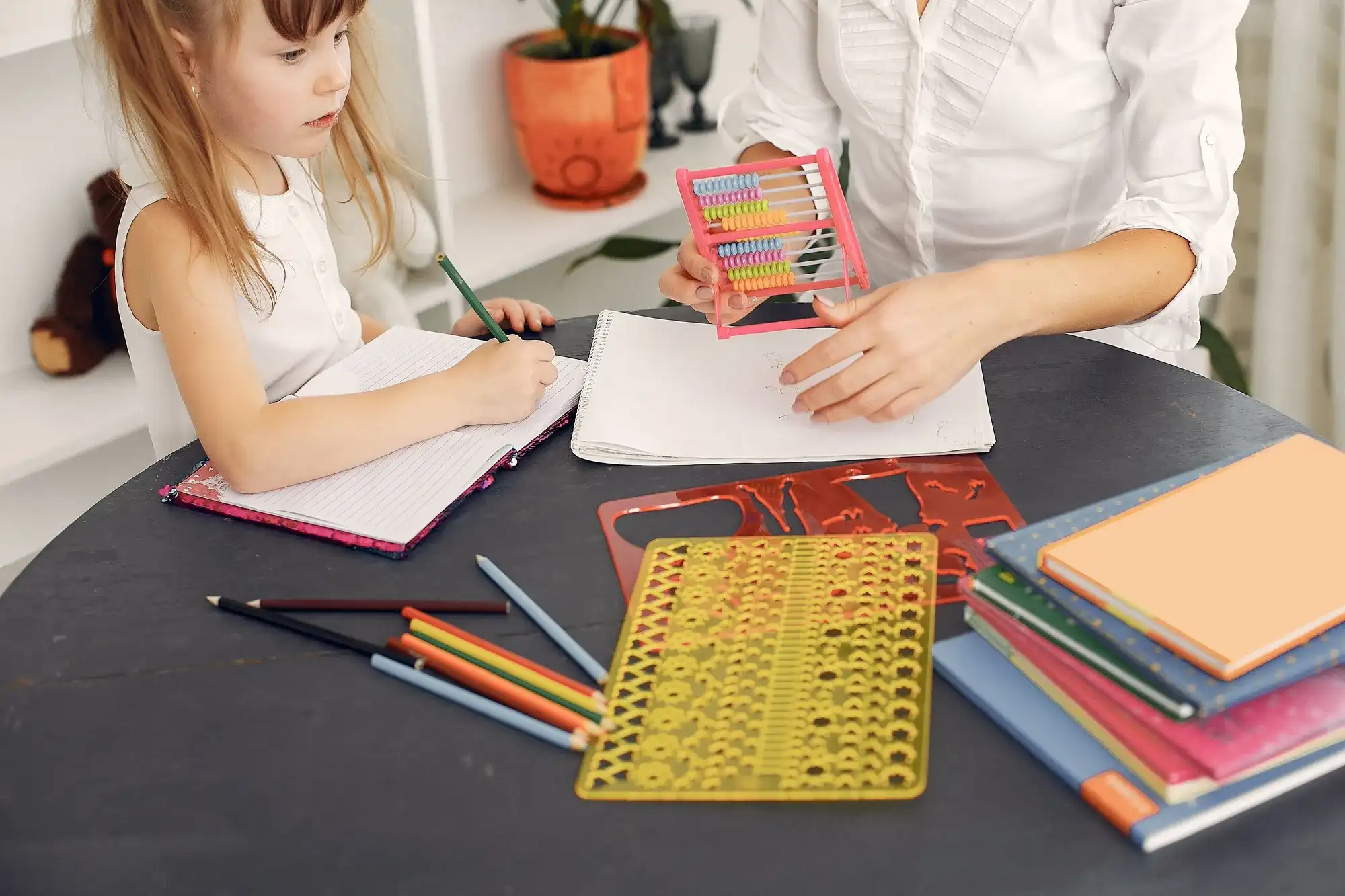
This is a made-up example to show how we share. It is not a real child's record.
Put the book away on hearing "Put your book away" without a demonstration. "Help me" was still quiet.
Use the help phrase again in pretend play with a soft toy.
At bath time or dinner, try one instruction in Japanese and one in English, as a game.
Notes are in English or Japanese. They are a guide to the next lesson, not an assessment.
A few things worth knowing before you decide.
Selection and interviews are covered on a separate page. This page is about the English used in the classroom once a place is confirmed.
Children start to speak at very different times, so we follow your child's pace.
The tutor supports your child to do school tasks themselves, with a little help where needed.
Teacher instructions and “I need help” phrases are practised before they are needed.
“Take out your book” and “Sit down”, learned with the body.
“Can you help me?” and “I don’t understand” become phrases a child can say.
Folder, pencil case, whiteboard: the objects a child will actually use.
“Can I play?” and “Do you want to…?” rehearse the first step.
Classroom readiness is practical. A child must understand instructions, ask when something is unclear and join in with a group. It is separate from admissions interviews and from general storytime.
The tutor acts as the teacher: “Open your workbook. Turn to page twelve.” The child finds the right page, and the tutor adds “Pencils down” and “Line up” as other routines.
The child practises three sentences: “Can you show me?”, “I don’t understand”, and “Can you say it again?” Each is paired with a real situation.
In a role-play, the tutor plays a classmate. The child practises “Can I join?” and “Can I have a turn?”
The tutor deliberately gives a confusing instruction so the child can practise saying “Sorry, I didn’t get that”, which is the most valuable sentence on the list.
A quiet child who does not understand often copies a neighbour or waits. Teaching a short phrase changes that.
Moment
The teacher says “Take out your green folder and put your name on the first page.” A new pupil has not caught the word “folder”.
Silent
The child looks at the next desk, sees nothing yet, and sits very still. The teacher moves on and the child misses the task.
Asking
“Excuse me, can you show me? Green… what?” The teacher holds up the folder. The child says “Thank you” and takes it out.
“Can you show me?” works for any unclear instruction, so one sentence covers many situations.
Teachers respond warmly to a child who asks, and that encourages the child to ask again.
A child who has a way out of confusion feels safer, which makes it easier to learn everything else.
This is an original example written for this page. Each school has its own routines and terms; the tutor adapts to the school once the family knows it.
| Stage | What is practised | Sign the child is ready for more |
|---|---|---|
| 1 | Common classroom instructions with actions | Responds without watching others |
| 2 | Three help phrases in role-play | Uses a phrase unprompted when the tutor is “confusing” |
| 3 | Group language: turns, sharing, joining | Takes a turn and asks to join |
| 4 | A mock lesson: listen, follow, ask, answer | Handles the sequence without the tutor stepping in |
The sequence adapts once you know the school’s own materials and language. We do not claim that practice here replaces the school’s own induction.
The right preparation depends on the school and the child.
International schools differ in curriculum, English level expected and support offered. Check the school’s own information first, and ask what it provides for new English learners.
A child who speaks everyday English fluently may need classroom language, not basic English. A true beginner needs the basics first.
Admissions interviews and classroom readiness are different tasks. We keep them separate so that preparation stays natural.
Most schools support new English learners. Tutoring is an addition, not a substitute, and we encourage families to speak to the school as well.
Role-play is a natural way to rehearse.
Take turns being the teacher and the pupil. Use the real instructions the tutor taught.
Give a deliberately unclear instruction, “Bring me the thing,” so the child can practise “Can you show me?”
Make clear that asking is a strength. Children who feel that asking is safe are more willing to do it in class.
Matching depends on your child's age, the languages used at home and at school, and how your child learns best. Before we suggest anyone we check the following.
We check for real experience of very young children.
Whether the tutor uses actions and pictures, short words and a calm pace.
Whether a tutor can reassure a child in Japanese when needed. This differs by tutor and is confirmed in advance.
Online, or in person in Tokyo depending on the area and on the tutor.
We start with a short conversation about your child. Then we suggest a tutor and a way of working.
Your child's age, the languages spoken at home and at school, and what you would like help with. To begin, your child's age and a few details are enough.
We tell you which tutor we suggest and how a lesson would run.
Lessons can be held online. In-person lessons in Tokyo depend on the area and on the tutor's current availability.
Fees depend on the tutor, the content and the lesson format, and we explain them in the free trial lesson or when you contact us. Our pricing page gives the current overview.
Tell us the kind of school, the start date and what your child has heard of English so far. We will say honestly what is possible and whether a suitable tutor is available.
These are questions families often ask before they get in touch.
No. It is practice in the English used in class after a place is confirmed. Selection has a separate page.
That is fine. We start with listening and acting. A silent period is completely normal.
Many families start a few months before the first day with short sessions. Even a little before the start, going through a school day, can help. Please ask us.
Not necessarily. We would ask what the school offers and only add what is missing.
No. This page is for schools and classes where instructions are given in English. It does not apply to Japanese-medium nurseries, kindergartens or schools.
Fees depend on the tutor, the content and the lesson format. We explain them in the free trial lesson or when you contact us.
No. This page covers classroom language after a place is secured or while the family is deciding. Admissions processes vary by school and we do not promise any outcome.
Even a few weeks help. Children differ, so the tutor will suggest a realistic plan after meeting your child.
Yes, if the family shares them. Using real classroom terms makes preparation more specific.
Yes. A child who is already in class but struggling to ask for help or join in can use the same practice.