
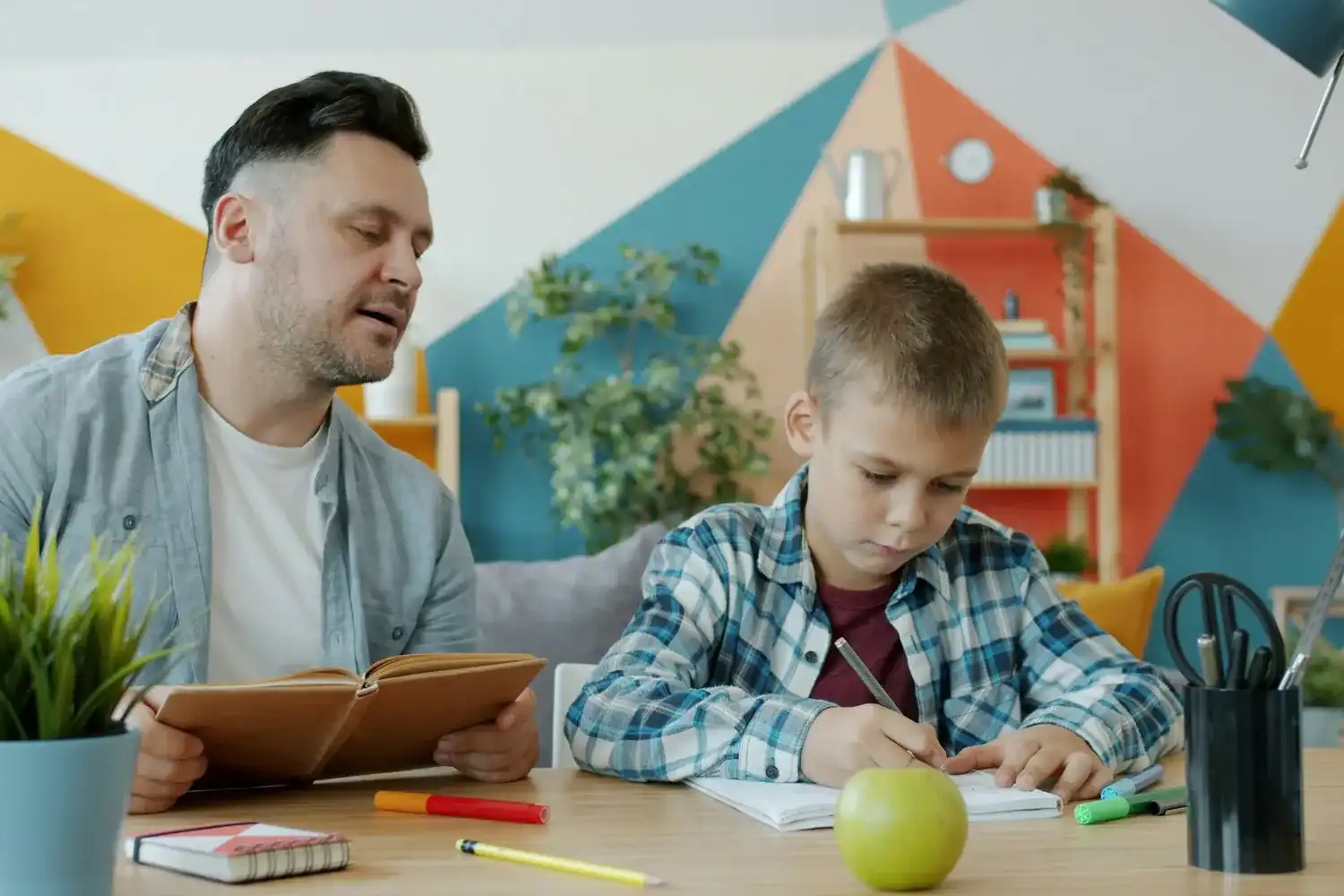
One-to-one Science tutoring
Science tutoring matched to your child's
actual subject and school level.
Difficult concepts, homework, preparing for a test, scientific vocabulary in English, reading diagrams and graphs. We look at the school materials you use now, then check whether we have a tutor who fits the subject, year group and curriculum.
- Free trial
- No enrolment fee
- Subject and year checked first
Which topics, year groups and formats we can cover depends on our tutors at the time. Tell us the situation first.
There is more than one reason
a student struggles with science.
Rather than treating it as one general problem, we try to find the point where understanding stops. That makes the next step clear.
Can follow the lesson, but the concept does not click
The terms are memorised, but explaining why something happens is hard. An earlier unit may have a gap.
Stuck on questions that ask you to read a diagram, table or graph
Some students need practice putting what the data shows into words, step by step.
Scientific terms and explanations in English are hard to follow
Is it the science or the English? Separating the two first shows what kind of tutor is needed.
Cannot get through homework or school handouts alone
We start with how to read the material and how to check what a question is asking.
Before a test, not sure what to review first
From the test scope, the school's materials and marked work, we set priorities.
Changed school or curriculum, and the pace or terms no longer match
We think about how to bridge a different order of topics or different vocabulary.
What we look at is how study is going. We do not judge medical or developmental causes behind understanding.
We organise what we check by
subject and year group.
Even within science, what we check and the tutor who suits differ by year group, subject and curriculum. We sort your request into the groups below first, then confirm whether we can help.
| Group | What we check | Where things stand |
|---|---|---|
| Primary and lower-secondary science | Year group, current unit and the school's materials | General school science support. This is the area where it is easiest to start. |
| Upper-secondary Physics, Chemistry and Biology | The topics for each subject, and the tutor's experience | Checked subject by subject and topic by topic. We cannot assume every subject or topic is covered. |
| Science taught in English (international schools, MYP, IGCSE and similar) | School, curriculum, course and language of instruction | We suggest a tutor only after confirming that we have someone who can help. |
| IB Diploma sciences (HL and SL) | The exact subject and level (HL or SL) | At present we cannot offer this on the assumption that we can cover it. We explain where things stand when you get in touch. |
Specialist Physics, Chemistry or Biology teaching, and any particular exam or level, is offered only where we can confirm a tutor's experience and availability.
Before looking for a tutor,
we work out where understanding stops.
If you do not know where the difficulty is, that is fine. We look at what you have now.
Confirm the school, year, subject and current unit
Which school, which subject, which unit.
Look at materials, notes and marked work
A textbook, a handout, notebook pages or a returned test is enough.
Find where it stops
Is it vocabulary, the concept, reading a diagram or graph, calculation, or the English wording?
Go back only if needed
Only when the cause seems to be an earlier unit do we decide how far to go back.
Set out what the tutor needs
From subject, year, curriculum, language of instruction and format, we list what the tutor should be able to do.
An example of sorting it out
- The concern
- A lower-secondary student who gets stuck writing a conclusion from a graph of experiment results.
- What we check
- Reading the graph, the meaning of the terms, or how to word a conclusion.
- Where we might go back to
- The basics of how variables and measurements relate, from an earlier unit.
- What the tutor needs
- Able to teach lower-secondary science, explain clearly, and work from the school's materials.
This is one example. How things actually proceed depends on the school, year and materials.
This is not a diagnostic test and gives no score. It is a way to sort out the situation from the materials and a conversation.
Lessons move from understanding together
to explaining the topic independently.
The aim is not to hand over answers but to reach the point where the student can explain the school's content in their own words. We move in stages.
Work through an example together
The tutor shows how to think about it and links the concept to the terms.
The student takes over part of it
Part of a method, reading a diagram, or using a term, with fewer and fewer hints.
The student explains it
A new question or a school task, explained in their own words with reasons.
Look back and decide what is next
What went well, what is still unsure, and what to strengthen next.
We do not complete homework, submitted work or assessed tasks for the student. We support the student's own understanding, within what the school asks for.
A tutor must fit the subject and year group,
not only be able to teach science.
The right tutor differs by year group, topic and curriculum. We confirm the points below before suggesting candidates.
- Subject and topic
- Year and current unit
- School / curriculum
- Language of instruction
- Online / in person
- Preferred times
- The tutor's current capacity
- Fit with teaching style
If we cannot confirm a tutor who fits
If we cannot currently confirm a tutor who fits your wishes, we tell you so plainly. We will not suggest that lessons can start straight away. Tutors' subjects and availability change over time.
After each lesson,
parents hear what was done.
We share what was covered, what was understood and what to check next, in a form parents can follow. We record only what we have actually seen, and we do not promise results.
An example report
- Covered
- Putting what a graph shows into sentences, step by step
- Understood
- Saying in their own words what each axis stands for
- Next to check
- How to write a conclusion that follows from the data
This only shows the format. It is not a real student's report.
Related services
and resources
Start with whichever is closest to your child's situation.
Frequently asked questions
Questions we are often asked about science.
Do you cover my exact Physics, Chemistry or Biology topic?
You can ask us, but we check subject, topic and year first and then tell you whether we have a tutor who can help. We cannot assume every subject or topic is covered.
Can you help with MYP, IGCSE or IB science?
You can ask us. We check the school, curriculum, course and level against our tutors' current experience before replying. If we cannot confirm a tutor who fits, we will say so.
Is lesson instruction in English available?
Language of instruction is one of the things we match on. If you want lessons in English, tell us when you get in touch. Not every tutor can teach in English.
Can we ask for in-person lessons?
It depends on the tutor and the area. We ask for your nearest station and preferred times and let you know whether it is possible. We cannot promise it, so please get in touch first.
How do we know which tutor suits us?
We check subject, year, curriculum, language, format, times and the tutor's current capacity, then suggest candidates. A trial lesson lets you check the approach and the fit, and we adjust if needed.
Can you use my child's school materials and notes?
Yes. Our basic approach is to follow the school's materials. How to share them is decided with you.
Can you finish homework or reports for my child?
No. We do not complete homework or submitted work for a student. We help with how to think about a task and give limited feedback on drafts, within what supports the student's own learning.
Tell us about the science
that is causing difficulty now.
Tell us the school, year, subject, the latest topic and the lesson format you prefer. We check whether we have a tutor who fits before suggesting anything.
No enrolment fee · materials normally free · you can just ask