
New to Japan
- Greetings and school routines
- Asking for help
- Friends and play
- Shops, trains, everyday situations
- Basic sentence patterns
- Listening confidence
Japanese for children · One-to-one
One-to-one Japanese support for international-school and expat children. From first words and everyday conversation to reading, writing and kanji, lessons follow what your child needs now and change as they grow.
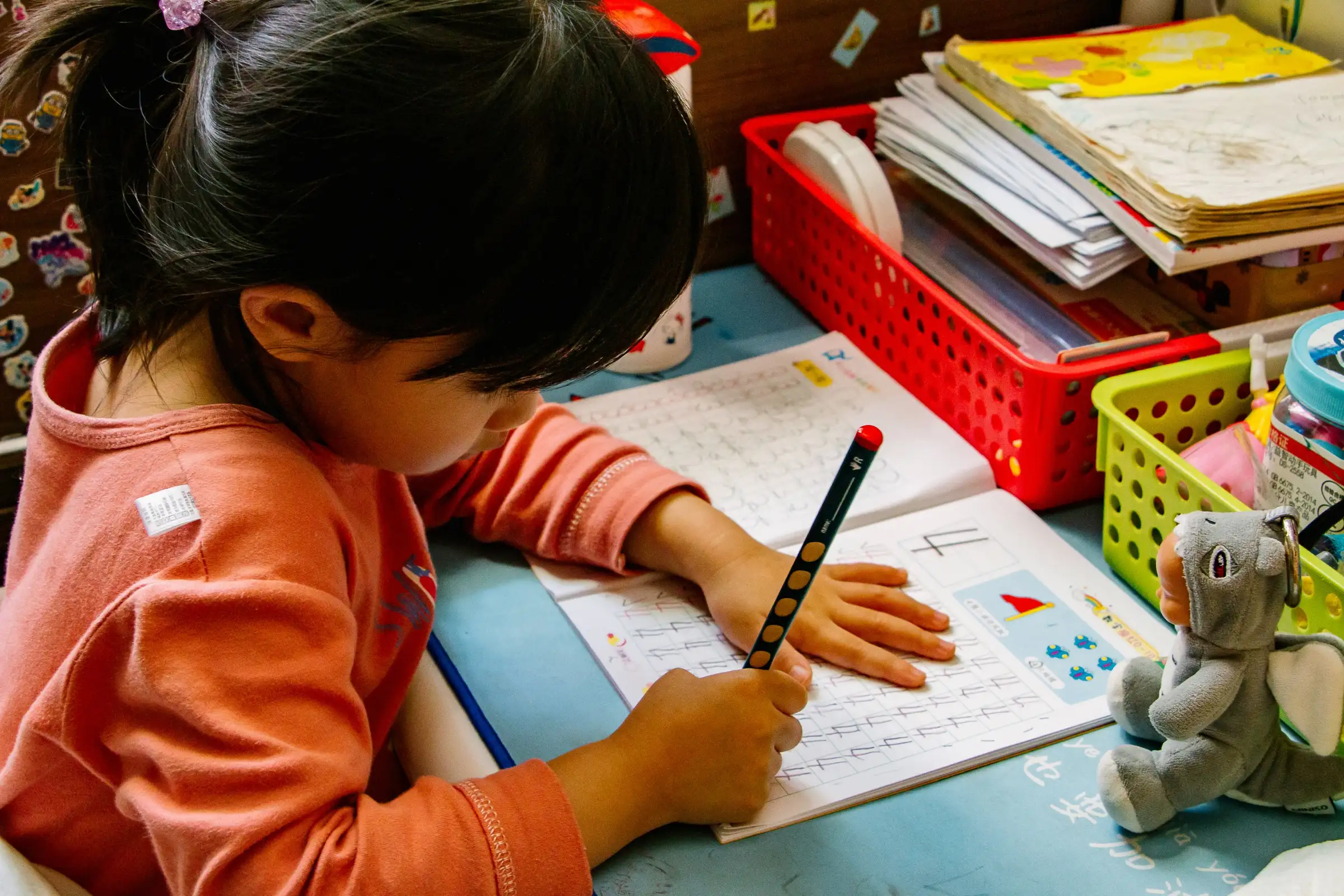
They follow everyday Japanese but hesitate when it is time to answer.
Conversation and literacy have grown at different speeds.
It may move too fast, too slowly, or work on a different skill.
You want more than survival Japanese, and for it to last.
A child can be confident talking with friends and still struggle to read. Another may know hiragana and kanji but find real conversation difficult. Instead of giving every child one "level", we first look at where Japanese is already working and where it is getting harder.
What we look at first
This is a conversation, not a test or a score. It shows us what to work on first.
We support the learning. We do not do the homework.
These are examples, not fixed programmes. Lessons are adjusted to the child's current needs rather than placing every child into the same sequence.
Every format below suits some families. Here is when each one makes sense.
Good when Your child benefits from classmates, a shared curriculum suits them, and the timetable works.
Good when You have a specific window, such as a holiday, and want a burst of study.
Good when You want to choose and manage tutors yourself, and the widest choice matters most.
Good when You want ongoing support, your child's skills are uneven, the focus will need to change, and you want tutor fit and clear updates. We also help keep lessons continuous rather than leaving you to book each one alone.
Petra is not always the better choice. If one of the others fits your family better, use it.
We do not assume that anyone who speaks Japanese can teach it to a child. When you tell us about your child, we look at what the lessons need, then check whether we have a suitable tutor.
Availability varies. If we do not have a suitable tutor for your child, we will say so.
Meet Petra tutors →Conversation, kana, reading or school Japanese.
Regular one-to-one lessons build continuity.
Where our lesson reports apply: what was practised, what is getting easier, where support is still needed, and what comes next.
When something is working, move on. When something is not, change the approach.
Focus often moves from
The continuity comes from how Petra supports your child over time. We cannot promise the same tutor for years. If a change is ever needed, we will talk it through with you.
If your question is not here, just ask us.
Yes, where an appropriate tutor is available. We begin with practical language for your child's age, such as greetings, school routines and asking for help, rather than assuming any prior knowledge.
Yes. The focus can be different for speaking, reading and writing, so lessons can concentrate on kana, kanji and reading while conversation continues in the background.
Where appropriate, yes. Please share the relevant materials so the tutor can see your child's current level and what the class is covering.
It depends on the tutor. If English explanations matter for your child, tell us and we will treat it as a requirement when we look for a match.
No. It also suits children who already communicate in Japanese but want stronger reading, writing, kanji or vocabulary for their age.
Yes. Petra's regular tutoring is built around ongoing lessons, and the focus can change as your child's needs change. Exact scheduling and tutor continuity depend on availability.
Possibly, depending on the content and the tutor. Tell us what your child is working on. This page is about building Japanese itself, so it is not a general service for every subject taught in Japanese.
If your child has a specific exam goal, let us know and we will first check whether a suitable tutor is available. This service is mainly about the Japanese your child needs for everyday life, reading and writing, and school.
They may be starting from first words, speaking comfortably but struggling with kanji, or needing more support with Japanese at school. Tell us where they are now and what you would like Japanese to become part of.
No pressure. We will reply with what we can offer and what we cannot.