
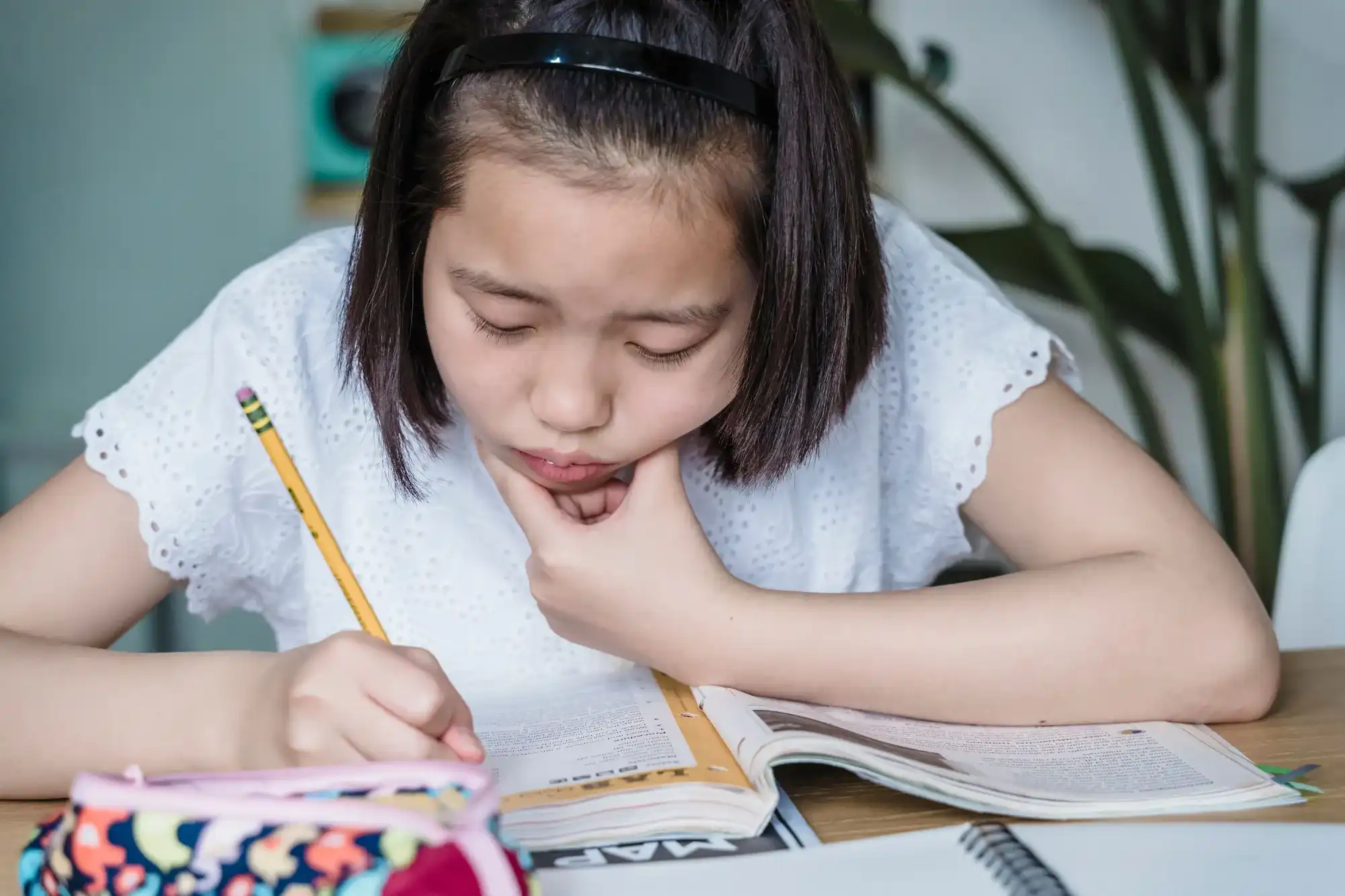
Question 1: a fact in the text
'What did Taro carry when he left home?' The answer, an umbrella, is written in the text.
Ages about 6 to 9 · Japanese literacy
This page is about Japanese, the language arts subject known as kokugo, not English reading. Reading a text aloud and understanding it are different skills, and so are knowing kanji and expressing an idea. We check reading aloud, vocabulary, comprehension and short writing one at a time, for children who already speak Japanese and want their reading and writing to keep up.
We ask about your child's age and how Japanese is used at home and at school, and check for a suitable tutor before suggesting anyone. Matching depends on tutor availability.
Reading difficulties do not have a single cause, so we start by finding where your child stops.
Turning letters into sounds is fine, but picturing the scene or the feelings is where it stalls.
Everyday conversation is easy, while kanji and longer text take much more time.
There are ideas, but no way yet to put them in order and build sentences.
A weekend school or a workbook may not give enough individual checking.
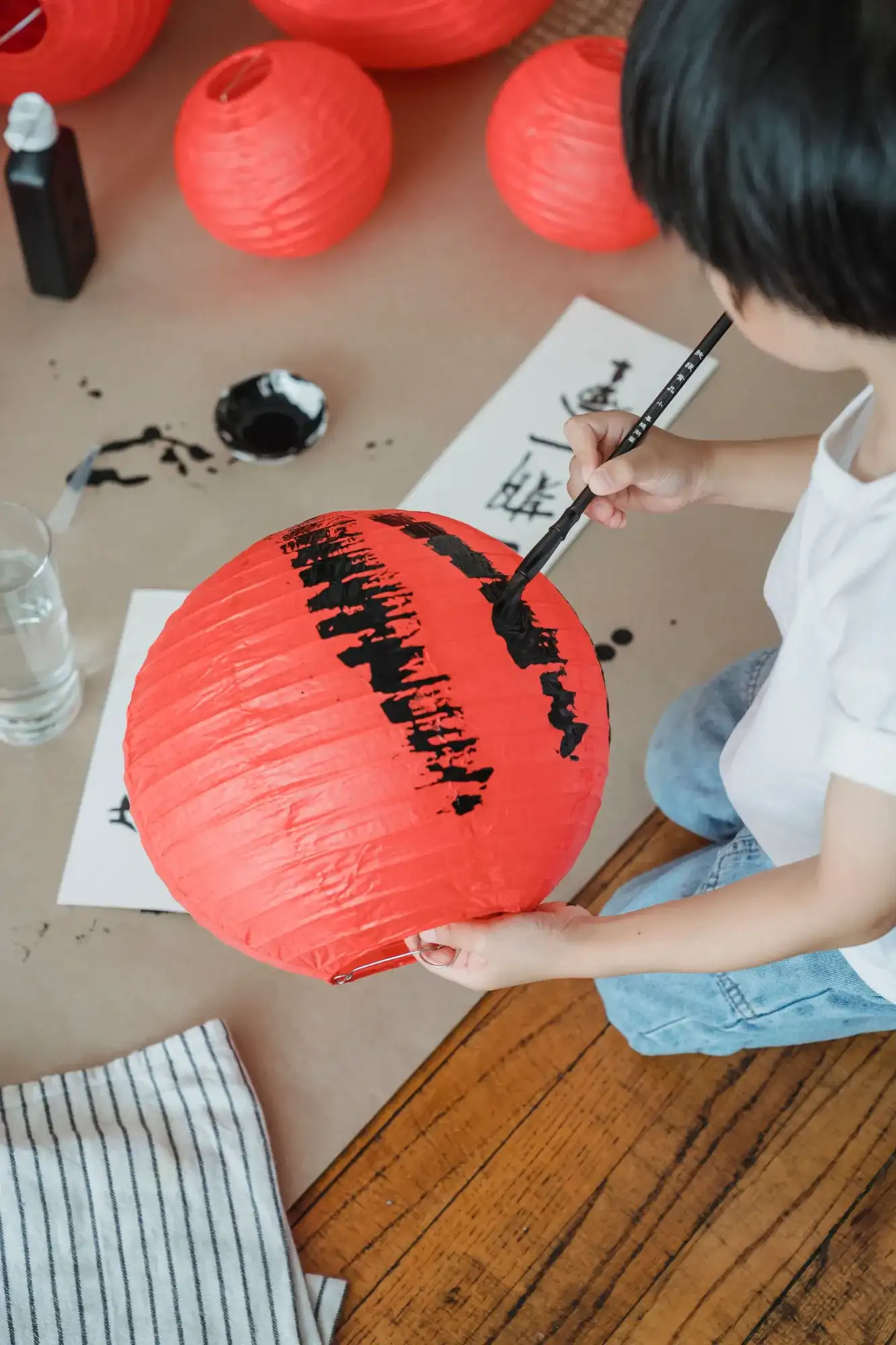
A short four-sentence story, then one question about a fact and one about a reason.
Passage written for this page (not school or published material)
In the morning Taro left home carrying an umbrella. The sky was cloudy, but it was not raining yet. When he got near school, a soft pattering began. Taro smiled. (Original Japanese text: あさ、たろうは かさを もって いえを でました。そらは くもっていましたが、あめは まだ ふっていませんでした。がっこうに つくころ、ぽつ ぽつと おとが しはじめました。たろうは にっこり わらいました。)
Question 1: a fact in the text
'What did Taro carry when he left home?' The answer, an umbrella, is written in the text.
Question 2: a reason to work out
'Why did Taro smile?' Because he was glad he had brought the umbrella. The evidence: he left carrying one, and the pattering began.
Pointing to 'where does it say that?' is the base of comprehension.
Your child learns to tell what the text says from what they imagine.
Finally, two sentences using a frame: 'I also once had a time when I was glad I brought ...'
The text is original and written to suit early readers. It is not from a textbook or a commercial workbook.
For a child whose writing stops at one short sentence, we show a sentence as parts. Adding one part at a time lets it grow naturally.
Start with “threw” and add only “where”. One new part per round is enough.
Japanese allows the order to move. Reading both versions aloud builds a feel for word order.
Your child reads the sentence aloud and listens for whether it runs out of breath or loses its meaning.
A guide, not an assessment or a diagnosis. We choose the focus from what we see in your child.
| Skill | What we often see | How a lesson responds |
|---|---|---|
| Reading aloud | Stops on letters, skips lines | Follow with a finger and read in meaningful chunks |
| Vocabulary | Knows words but cannot use them | Link them to pictures and scenes, then use them in short sentences |
| Kanji | Cannot recall the form or stroke order | Break into parts, then use in compounds and sentences |
| Comprehension | Stalls when asked about the text | Underline evidence, separate fact from reason |
| Writing | One sentence, jumbled order | Build from word to sentence to linked sentences with a frame |
A small progression: noun, verb, short sentence, connected sentences.
We follow your child's school or weekend-school textbook where you can share it.
Listening shows where the difficulty lies.
Say the meaning and use it in a short sentence.
One about a fact, one about a reason.
Use a frame and your own words.
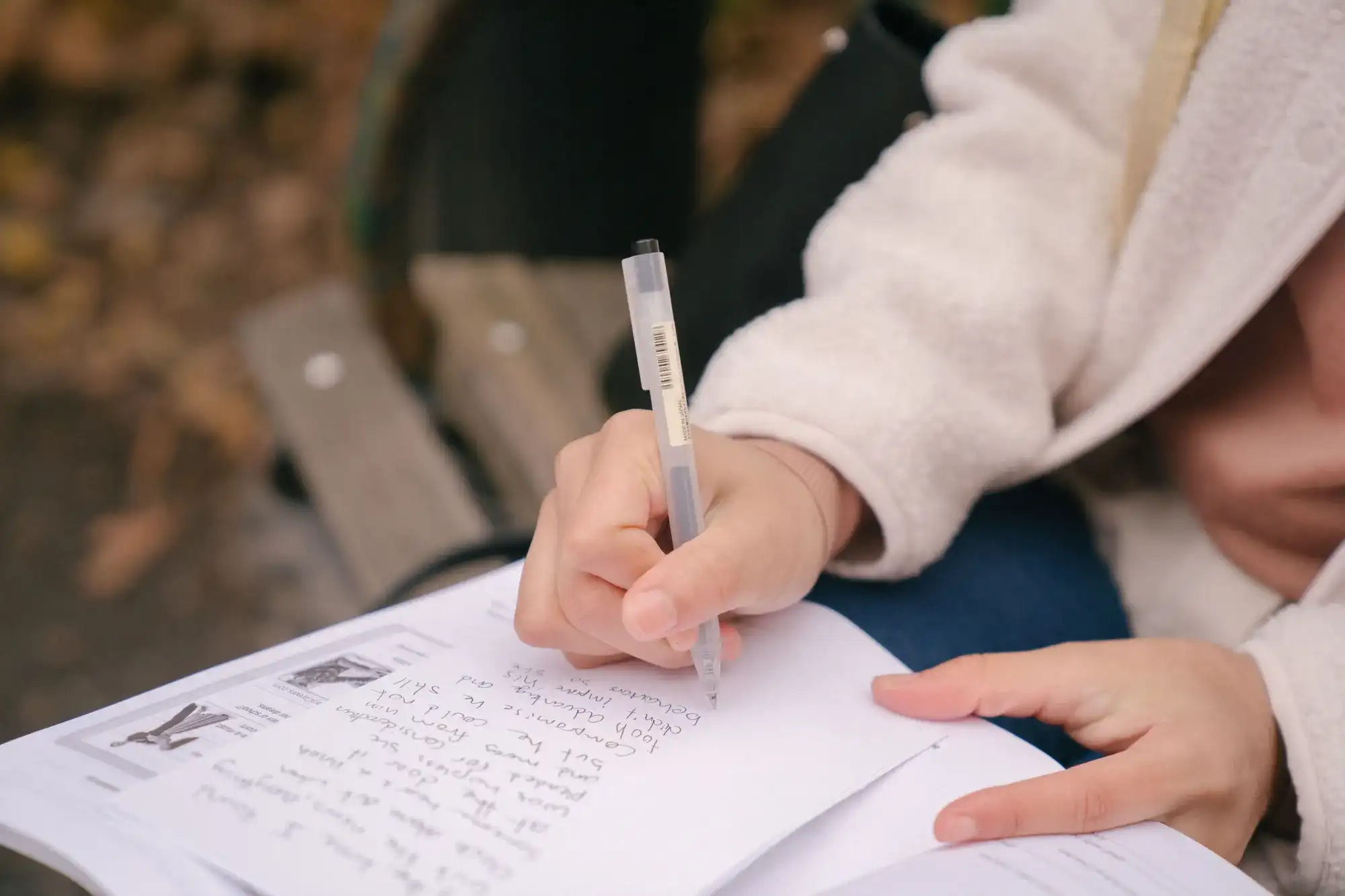
Before writing it out again and again, find what the shape means. For example 休 (yasumu, “to rest”) is a person leaning on a tree.
休 is the person radical (人) and 木 (tree). The child names the parts clearly.
Draw a person resting beside a tree and link the picture to “rest”.
Collect three uses: 休み, 休日 and 休む, with their readings.
Make one short sentence, then try writing the kanji the next day without looking.
For some children, meeting meaning and use sticks better than copying one character dozens of times.
By picture, by sound or by writing: we watch the response and change the method.
We ask which kanji the school teaches and in what order, so we do not race ahead.
This is one way to remember a kanji. For some characters the “parts” story does not fit.
A made-up example to show the format. It is not a real child's record.
Reads smoothly and describes the scene in words.
When asked for a reason, sometimes guesses instead of returning to the text.
Read a page at bedtime and ask 'where did it say that?'.
Illustrative only. The real format is agreed with each family.
Pick the one closest to how your child uses Japanese.
Your child speaks Japanese without difficulty but finds reading, kanji, comprehension or writing hard.
If your child needs to start from hiragana and katakana, or finds speaking Japanese hard, see our Japanese for children page.
This page is about Japanese. For English reading and writing, the phonics and early reading page is closer.
Plain information before you decide.
This page is about literacy for children who already speak Japanese day to day.
We make no medical or developmental judgement about reading difficulties. If you are worried, please speak to a specialist.
Schools and children differ, so we promise no particular outcome.
Matching depends on your child's age, the subject and how your child learns best. Before we suggest anyone we check the following.
Japanese at home and at school, and reading and writing experience.
We follow your school or weekend-school books where available.
Online, or in person where the area and tutor allow.
Times that suit school and your child's energy.
We start with a short conversation about your child and what is hard at the moment. Then we suggest a tutor and a way of working. Nothing on this page is a promise of availability.
Your child's age and school year, the school or curriculum, and the moment that feels hardest. We do not need your child's schoolwork or sensitive personal details to begin.
If a suitable tutor is available we tell you who we suggest and how lessons would run. If none is, we say so.
Lessons can be held online. In-person lessons in Tokyo depend on the area and on the tutor's current availability.
Fees depend on the tutor, the content and the lesson format, and we explain them in the free trial lesson or when you contact us. Our pricing page gives the current overview.
Tell us your child's age, how Japanese is used at home and at school, and what worries you. We will explain what is possible and whether a suitable tutor is available.
These are questions families often ask before they get in touch.
Speaking and literacy grow separately. We find where your child stops, across reading aloud, vocabulary, kanji, comprehension and writing, and focus there.
Many children grow up with more than one language. We ask how languages are used at home and adapt the Japanese reading and writing work.
Where you can share a textbook or weekend-school material, we follow it.
No. We do not diagnose or treat. If you are concerned, please talk to the school or a specialist.
No. We help your child structure their own words.
Speaking and reading or writing grow separately. Children who live abroad often just meet less written Japanese. We listen to your child read to see which it is.
We do not write it for your child. We draw out the ideas, work on how to structure them and support your child to write in their own words.
If you share your child's textbook or year we follow it. If your child is not in a Japanese school we can still use the same age-based guide.