

Ages 3 to 6 · Classroom English
English Classroom Readiness for Children Starting International School
Gentle practice of the English used in the classroom: following instructions, asking for help and saying what you mean.
Admissions preparation has its own page.
Tutors Who Support English at School
Petra is welcoming new students in the Netherlands. For classroom and home lessons, these are the three tutors we introduce first.

Riku
English for young children, primary pupils and adults; IELTS and TOEFL
Open to enquiries in the Netherlands
Co-founder of Petra. Friendly and patient with beginners, from kindergarten children and primary pupils to adults.
View tutor profile →
Yutaka
History, economics, secondary study, IELTS, TOEFL and music
Open to enquiries in the Netherlands
Co-founder of Petra. Supports secondary students, IELTS and TOEFL, economics and music.
View tutor profile →
Leon
Maths, Geography & GCSE/A-Level
Open to enquiries in the Netherlands
Grew up in Tokyo, with English as a first language and advanced Japanese, so can work in both. The published profile centres on maths, geography and GCSE/A-Level teaching.
View tutor profile →
We settle the tutor, format and times together with you after hearing about your child's age and what you hope for, so please get in touch whenever you are ready.
What parents tell us
These are common worries before a child's first term.
Will my child follow the teacher's instructions?
Understanding an instruction without watching everyone else is a skill of its own.
Will they ask when they need something?
Parents wonder whether their child will say "I need the toilet" or "I don't understand".
What about talking to classmates?
Taking turns and asking to borrow something are small chats that need words.
My child enjoys English songs, but class may be different
Responding to an instruction is a different skill from singing or reading a picture book.

Eight example classroom phrases
We care more about whether a phrase works in a real moment than about perfect grammar. In lessons each one is paired with an action or a picture.
| Phrase | What it helps a child to do |
|---|---|
| Please put your book away. | Listen and act on a teacher's instruction |
| Can you help me? | Ask for help when stuck |
| I don't understand. | Say plainly that something is unclear |
| Can I try? | Show that you want to join in |
| I need a break. | Tell an adult when tired or upset |
| It's my turn. | Take turns with a classmate |
| Where is the toilet? | Ask for something important without embarrassment |
| Can I have some water? | Ask for a physical need |
These examples were written for this page. They are not any particular school's instructions.
From hearing an instruction to asking independently
A child does not need to start speaking at once. We move through the stages one at a time.
| Stage | What the child does | Lesson example |
|---|---|---|
| 1. Listen and move | Follows the teacher's gestures and the room, even without knowing the words | Hears "Stand up" and "Sit down" with actions |
| 2. Understand and move | Understands the words alone | Hears "Put your book away" with no demonstration |
| 3. Answer in a word | Reacts briefly: "Yes", "No", "Me!" | Answers "Do you want to try?" in one word |
| 4. Ask for what you need | Asks for help or a break unprompted | Uses "Can you help me?" and "I need a break" in different situations |
| 5. Talk to a friend | Takes short turns in conversation | Uses "It's my turn" during pretend play |
The stages are a guide. Many children move back and forth between them.
Examples of one-to-one lessons
In these examples the tutor plays the teacher and your child plays a pupil. Switch tabs to see them.
Examples written for this page (not a real child's session)
Instruction cards
Listening to an instruction and acting on it, with everyday things.
- Materials
- A picture book, a pencil, a bag: your child's own things. No school handouts.
- Tutor's moves
- Says "Please put your book away" while showing the action. The second time, says it without the action.
- Child's moves
- Puts the book in the bag. Words are not needed; acting is enough.
- What we look for
- Does your child understand without a demonstration? When unsure, do they check the tutor's face?
- Next time
- Add more of the instructions that went smoothly and go back to action-assisted ones for those that did not.
Asking for help
A small, safe problem makes asking for help natural.
- Materials
- A box with a stiff lid, or a toy on a high shelf: a safe mild difficulty.
- Tutor's moves
- Waits when the child struggles, then models "Can you help me?"
- Child's moves
- Copies with "Help!" or "Help me".
- What we look for
- Relief on being helped after asking. We welcome the attempt even if the words are not perfect.
- Next time
- Add "I don't understand" in other situations.
Pretend classmates
Two soft toys practise taking turns and asking to join in.
- Materials
- Two soft toys and some blocks.
- Tutor's moves
- Makes a toy say "It's my turn" or "Can I try?"
- Child's moves
- Replies or copies as the other toy.
- What we look for
- Do words come more easily to a toy? Some children speak in play who stay quiet in front of people.
- Next time
- Bring phrases that came out into the next pretend game.
We adapt to your child and the day. These examples are not a promise of results.
Which schools this is for
This page is for children joining an English-medium international school or early years class in the Netherlands.
It is for
Schools and classes where day-to-day instructions are given in English.
It is not for
Ordinary Dutch primary schools, where lessons are in Dutch. We do not teach Dutch.
School support comes first
Many schools provide English as an Additional Language (EAL) support. Our lessons add to it and do not replace it. Whether they are needed at all depends on what your school provides.
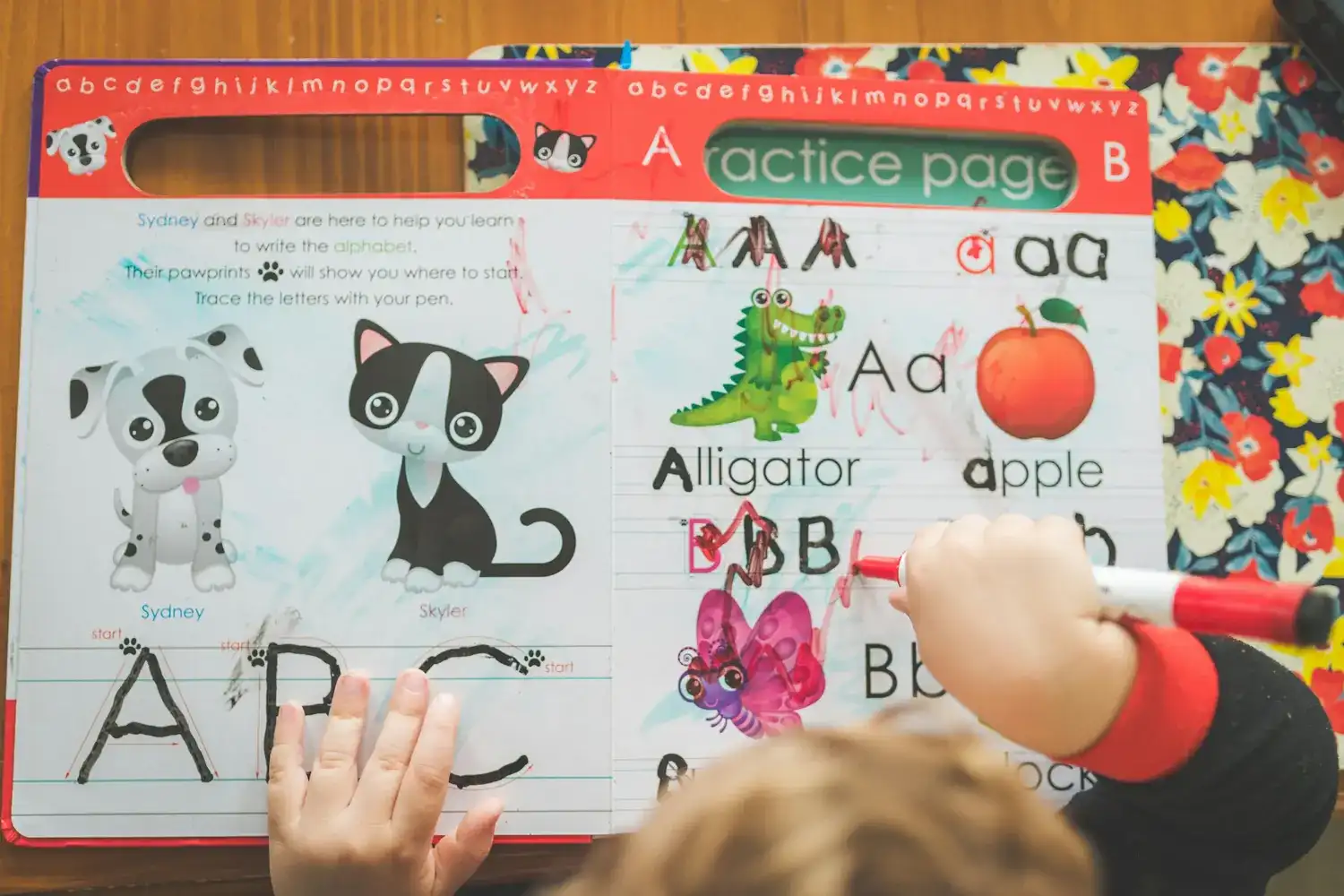
Before the start, and the first week
This is one example. We adjust it to the start date and your child.
Talk through a school day
The morning gathering, toilet, lunch: we look at the flow of a day together.
Practise the most likely phrases
From the list above, three or four phrases your child is most likely to need.
Try them in pretend play
A pretend classroom lets your child listen, act and say something.
Watch the first week
After the start, you tell us what you notice and we adapt.
A child does not need to learn many words in advance. Language grows quickly once the days begin.
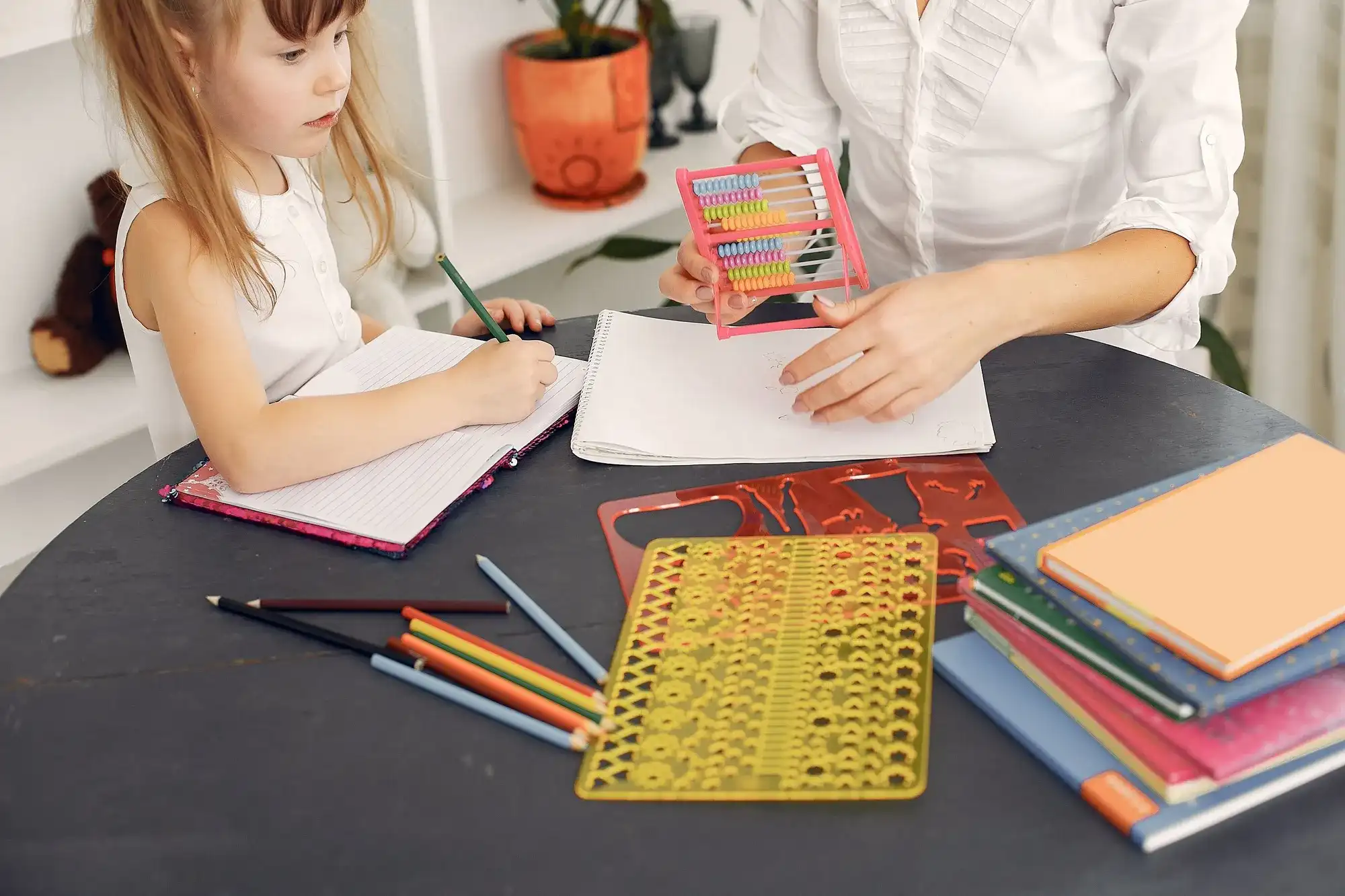
What a learning note could look like
This is a made-up example to show how we share. It is not a real child's record.
What we saw (example)
Put the book away on hearing "Put your book away" without a demonstration. "Help me" was still quiet.
Next step (example)
Use the help phrase again in pretend play with a soft toy.
At home (example)
At bath time or dinner, try one instruction in Japanese and one in English, as a game.
Notes are in English or Japanese. They are a guide to the next lesson, not an assessment.
What these lessons focus on
A few things worth knowing before you decide.
Admissions have their own page
Selection and interviews are covered on a separate page. This page is about the English used in the classroom once a place is confirmed.
Speaking comes at its own time
Children start to speak at very different times, so we follow your child's pace.
Your child's own work
The tutor supports your child to do school tasks themselves, with a little help where needed.
We check that the tutor fits a young child
Matching depends on your child's age, the languages used at home and at school, and how your child learns best. Before we suggest anyone we check the following.
Experience with ages 3 to 6
We check for real experience of very young children.
Clear, slow instructions
Whether the tutor uses actions and pictures, short words and a calm pace.
Japanese when it helps
Whether a tutor can reassure a child in Japanese when needed. This differs by tutor and is confirmed in advance.
Format and place
Mainly online. In person around Amstelveen and Amsterdam depends on the tutor.
What we confirm before lessons begin
We start with a short conversation about your child. Then we suggest a tutor and a way of working. Petra is accepting students in the Netherlands. Nothing on this page is a promise of a place at a school or a result.
What we ask you
Your child's age, the languages spoken at home and at school, and what you would like help with. To begin, your child's age and a few details are enough.
Suggesting a tutor
We tell you which tutor we suggest and how a lesson would run, then settle the place and times with you. Online or in person, we look for the way that suits your family.
Online or in person
Petra is accepting new students in the Netherlands. Choose classroom lessons in Petra Westwijk-klaslokaal (Dignahoeve 54), home visits mainly in Amstelveen and Amsterdam, or online across the country. We confirm the tutor and times with you.
Price and first lesson
Fees depend on the tutor and the lesson format. When you contact us we confirm the current Netherlands prices and what is available for a first lesson. Our pricing page gives the current overview.
Tell us about your child
and we will go through it with you
Tell us the kind of school, the start date and what your child has heard of English so far. We will say honestly what is possible and whether a suitable tutor is available.
Frequently asked questions about English classroom readiness
These are questions families often ask before they get in touch.
Is this admissions preparation?
No. It is practice in the English used in class after a place is confirmed. Selection has a separate page.
What if my child speaks very little English?
That is fine. We start with listening and acting. A silent period is completely normal.
When should we start?
Many families start a few months before the first day with short sessions. Even a little before the start, going through a school day, can help. Please ask us.
Do we still need this if the school offers EAL support?
Not necessarily. We would ask what the school offers and only add what is missing.
Is this useful for a Dutch-language primary school?
No. Ordinary Dutch primary schools teach in Dutch, and we do not teach Dutch.
How much does it cost, and is there a first lesson?
Fees depend on the tutor and the lesson format. When you contact us we confirm the current Netherlands fees and first-lesson arrangements. They are not stated on this page.