
Temple University, Japan Campus (TUJ) was founded in 1982 as the Japan campus of Temple University in the United States. Every class is taught in English, and students work toward an American degree while living in Japan.
TUJ undergraduate at a glance
| Founded and accredited | Founded 1982; accredited by the Middle States Commission on Higher Education |
|---|---|
| Majors | 14 majors, including psychology, artificial intelligence, computer science, cybersecurity, economics, international affairs, international business and tourism, hospitality and event management |
| Terms | Fall (late August to December), spring (January to April) and summer |
| Campuses | City Campus near Sangenjaya and Hillside Center near Mizonokuchi in the Tokyo area, plus TUJ Kyoto |
| Tuition (per semester) | 910,000 yen for 12 to 18 credits; the page names no academic year |
| Admission | Rolling, with a decision within four weeks of a complete application |
Sources: TUJ: Undergraduate; TUJ: About the undergraduate programme; TUJ: Tokyo area locations; TUJ: Cost and financial aid; TUJ: Admissions (checked 20 November 2026)
The university and its campuses
Official information
The university
- TUJ was founded in 1982 and is accredited by the Middle States Commission on Higher Education.
- There are 14 majors. Besides psychology they include artificial intelligence, computer science, cybersecurity, economics, international affairs, international business studies, and tourism, hospitality and event management. Certificates such as data science are also offered.
- The terms are fall, spring and summer. Fall runs from late August to December and spring from January to April.
Sources: TUJ: Undergraduate; TUJ: About the undergraduate programme; TUJ: Admissions (checked 20 November 2026)
Official information
Where classes are held, and student activities
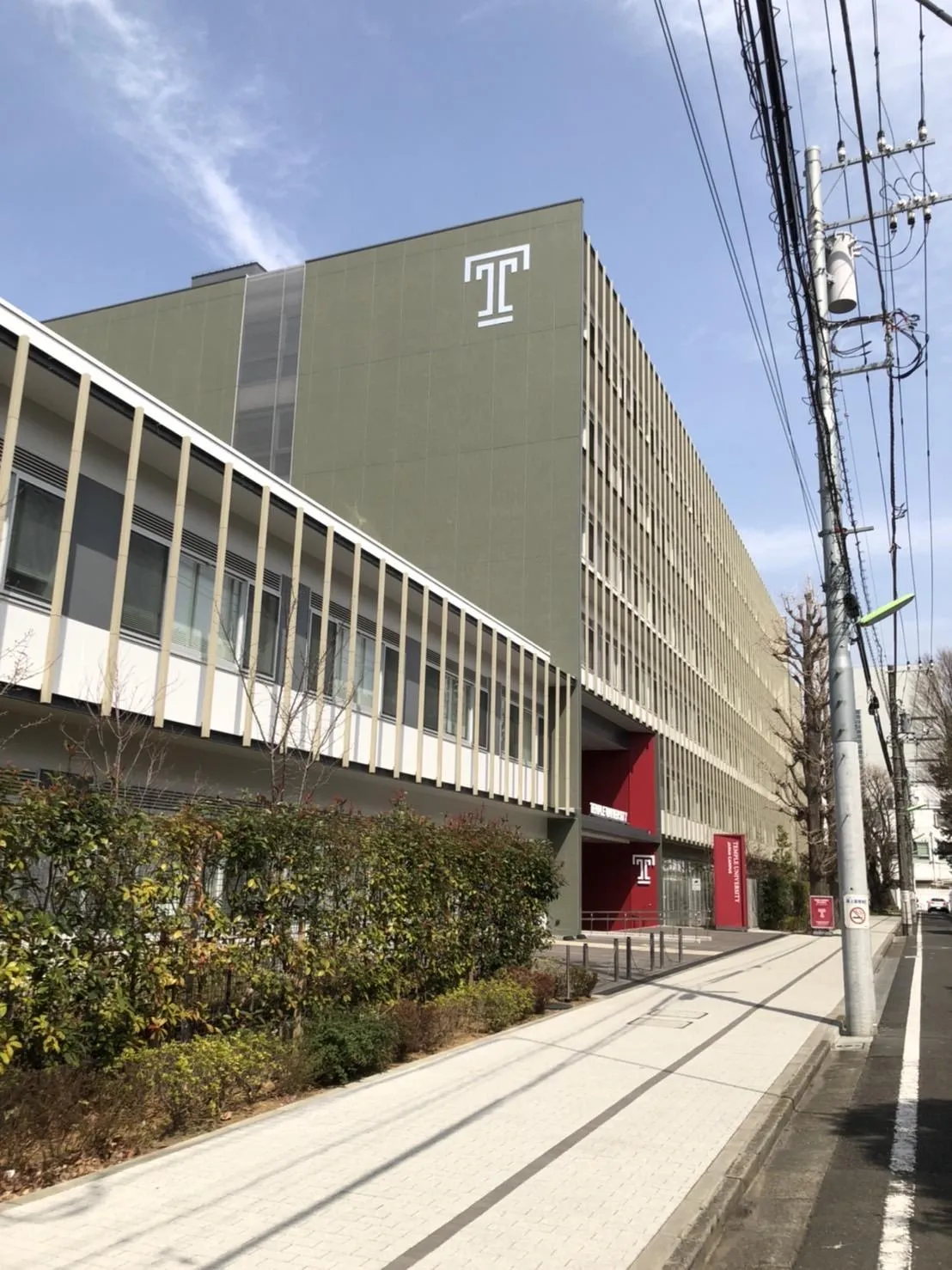
- In Tokyo there is the City Campus near Sangenjaya and the Hillside Center, whose nearest station is Mizonokuchi.
- The Hillside Center opened in August 2026. It is an eight-storey building in Takatsu-ku, Kawasaki, and hosts general education, First Year Experience and Bridge Program courses.
- Upper-division and major courses are held mainly at the City Campus in Sangenjaya or at TUJ Kyoto.
- Student life includes clubs and organisations, student government and a programme board.
Sources: TUJ: Tokyo area locations; TUJ: Hillside Center announcement; TUJ Kyoto; TUJ: Undergraduate (checked 20 November 2026)
Official information
Information sessions and tours
- TUJ holds Information Sessions rather than open days, on campus and online, mostly at weekends. They cover the admissions process, a campus tour and conversations with current students.
- On weekdays, Student Ambassadors lead campus tours, booked through a dedicated portal.
Sources: TUJ: Information Sessions; TUJ: Student Ambassadors and campus tours (checked 19 November 2026)
A current student also recommends visiting in person. What to look for before you apply is in the TUJ article, alongside her own words.
Majors and curriculum
Official information
The curriculum and faculty
- The sample curriculum is made up of introductory courses, a psychology science requirement, developmental, clinical and social foundation courses, brain and cognitive science foundation courses, a research methods course, advanced courses numbered in the 3000s, an elective and a senior capstone.
- The faculty section names neuroscience, clinical, social, cognitive and developmental psychology, and describes a cross-cultural focus on Asia and the United States.
- Child Psychopathology and Treatment is listed among the advanced courses. Related courses listed include Phases of Development: Infancy, Cognitive and Language Development, and Personality, Social and Emotional Development.
Sources: TUJ: Psychology major (checked 19 November 2026)
A psychology student describes a class that stayed with her. That class and her reasons for choosing TUJ are in the full interview with Eri.
Admission requirements and deadlines
Official information
Admission requirements
- The personal statement is 250 to 400 words, typed in English. Requirements can change by year, so check the page for the year you apply.
- TUJ is test-optional: SAT and ACT scores are not required for admission.
- Applicants whose first language is not English need evidence of English proficiency. Minimums listed include IELTS Academic 6.0, PTE Academic 53 and Duolingo 110, taken within two years. Check TUJ's page for the TOEFL requirement.
- Applicants below the minimum may qualify for conditional admission through the Bridge Program, which builds academic English in three levels. Students sponsored for a visa are expected to finish it within one year.
- Waivers are listed, for example three or more years in a curriculum taught only in English, or an SAT or ACT score.
- Official transcripts are required from every high school attended. The eligibility page states that the average GPA of accepted applicants in 2024 to 2025 was 3.33 on a 4.0 scale.
Sources: TUJ: How To Apply (undergraduate); TUJ: Eligibility Requirements; TUJ: Bridge Program (checked 20 November 2026)
Official information
Application deadlines (17:00 Japan time)
- Fall entry: Early Action on 15 November of the previous year. 1 April if you are seeking a student visa through TUJ, 1 July if not.
- Spring entry: 1 October if seeking a student visa through TUJ, 1 November if not.
- Summer entry: 15 February with a visa through TUJ, 1 March without.
- Scholarships have separate deadlines; see TUJ's page.
Sources: TUJ: Application deadlines (checked 20 November 2026)
TUJ is test-optional, so the SAT and ACT are not required for admission, while applicants whose first language is not English do need to show English proficiency. The SAT itself is explained in What is the SAT?.
Tuition and scholarships
Official information
Tuition and financial aid
- Tuition depends on credits taken per semester: 910,000 yen for 12 to 18 credits (full-time), 830,000 yen for 11, 410,000 yen for 5 and 130,000 yen for 1. The page was updated in June 2026 and does not name an academic year, so confirm the figure for your year.
- Merit scholarships can cover up to 100 percent of tuition, regardless of nationality.
- Admission is rolling, with a decision promised within four weeks of a complete application. Accepted students may defer for up to three semesters.
Sources: TUJ: Cost and financial aid; TUJ: Admissions (checked 20 November 2026)
Study abroad and the Kyoto campus
Official information
Study abroad and Kyoto
- TUJ students can study at the main campus in Philadelphia, in Rome and Spain, through exchange programmes and in faculty-led summer programmes. A group advising session is the mandatory first step, followed by individual advising, and students are told to confirm with an advisor that credits will meet their degree requirements.
- Credit exchange with Meiji, Musashi and Showa Women's universities lets students take courses TUJ does not offer without paying extra tuition.
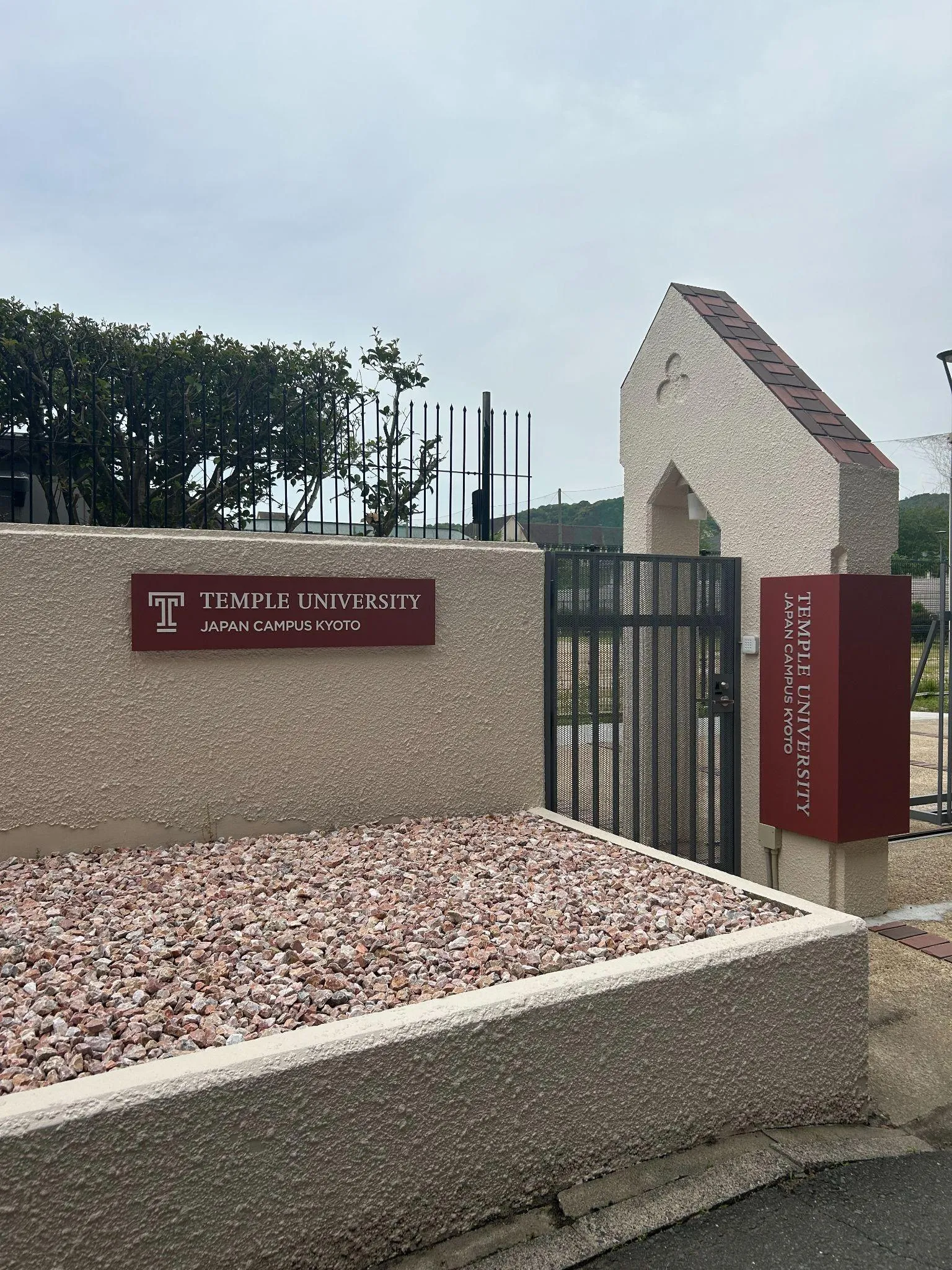
- TUJ Kyoto opened in January 2025.
Sources: TUJ: Study abroad; TUJ Kyoto (checked 20 November 2026)
Official information
The Kyoto campus
- The campus is near Fushimi Inari Shrine, with Osaka, Kobe and Nara a short train ride away.
- Students can take major, general education, liberal arts and STEM courses, for all four years or just one semester.
- TUJ's Kyoto courses page says that from fall 2026 degrees in AI, computer science, communication studies and tourism can be completed in Kyoto. Check that page for which majors are currently supported.
Sources: TUJ Kyoto; TUJ Kyoto: undergraduate information; TUJ Kyoto courses (checked 20 November 2026)
Official information
Housing and scholarships
- Kyoto housing is arranged by TUJ, which handles contracts, utilities and internet, in furnished single units with a private kitchen. TUJ says there are no deposits and everything is included. Fees depend on room category and semester and are listed on TUJ's housing page.
- For new Kyoto students TUJ lists an Inaugural Scholarship of 434,100 yen, equal to the matriculation fee, and a First Bridge Scholarship of 224,800 yen, equal to the Bridge entrance fee, for spring, summer and fall 2027 entry.
Sources: TUJ Kyoto housing; TUJ Kyoto: undergraduate information (checked 20 November 2026)
Exchanges with the UK partner are covered in the UEA guide, and a summer semester in Kyoto in the TUJ Kyoto article.
Preparing your English for TUJ
From a current student: Petra Voices
Eri, who studies psychology at TUJ and interns at Petra Tutors, tells her own story in these interviews and articles, kept apart from the official facts.

A TUJ student on choosing a university, studying abroad and interning: 17 questions
A student who spent ten years growing up in New Zealand and now studies psychology at Temple University Japan answers 17 questions, from choosing a university to living alone and interning, in full.
11 min read
Temple University Japan admissions: entry requirements, applying, tuition and student life, with psychology as an example
An American degree, earned in Japan and in English. Entry requirements, how to apply, deadlines, tuition, the psychology major and campus life, from TUJ's own pages and a student's experience.
9 min read
TUJ Kyoto: the campus, classes, housing, the summer term and information sessions
TUJ's Kyoto campus opened in 2025. What can be studied there, the single-occupancy housing, scholarships and information sessions from official pages, with a student's account of a summer semester in Kyoto.
4 min read
An exchange at the University of East Anglia (UEA): requirements, student housing, visas and campus life
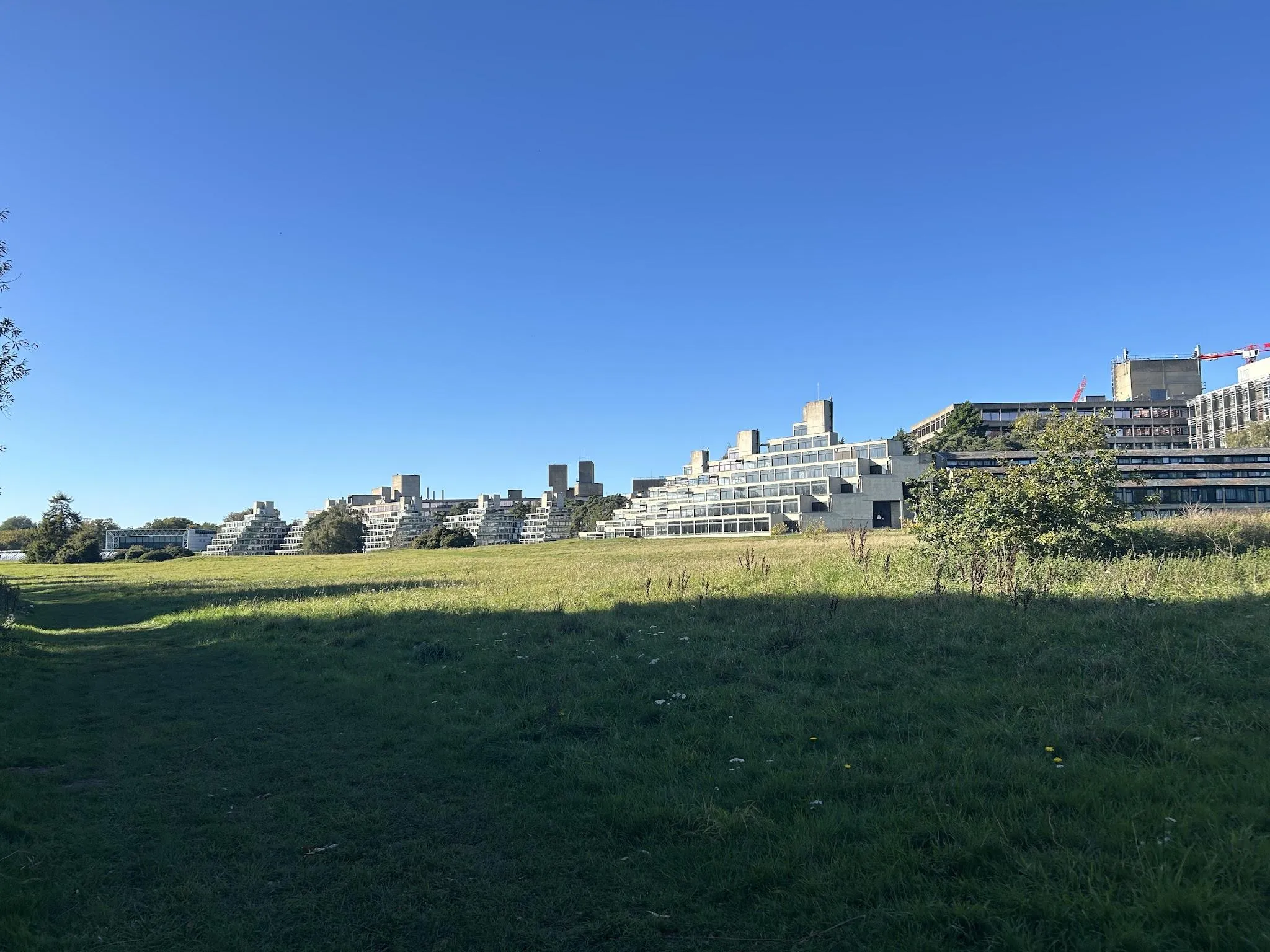
UEA, in Norwich in eastern England, is one of TUJ's exchange partners. Requirements and credits, housing prices, visas and campus life, from official sources and the account of a student who went.
6 min read
Related reading
Waseda's English-Based Degrees: 2027 Admissions and How to Prepare for Six Schools
If you are aiming for an English-based bachelor's programme at Waseda in 2027, first check your chosen school, your intake and the education system of the school you attended. Here is the path from choosing a school to what happens after you apply, based on official information.
Waseda SILS Tuition History: First-Year Costs, 2021 to 2026
SILS's first-year published cost is 1,593,000 yen for 2021 to 2023 entry and 1,693,000 yen for 2024 to 2026 entry. Why it changed, and how to think about fees while studying abroad.
How Much Has Keio PEARL Tuition Risen? 2021 to 2026
Tracing PEARL's first-year published cost year by year through official university documents shows a rise of 160,000 yen from 2021 to 2026. Year-by-year amounts and cautions on reading them.
ICU Tuition History: First-Year Costs, 2021 to 2026
ICU's first-year published cost for the College of Liberal Arts rose about 5.2%, from 1,731,000 yen in 2021 to 1,821,000 yen in 2026. Year-by-year amounts, the breakdown, how ELBA fits in, and how to compare with other universities.



More university guides
References
- TUJ: Undergraduate (checked 20 November 2026)
- TUJ: About the undergraduate programme (checked 20 November 2026)
- TUJ: Tokyo area locations (checked 20 November 2026)
- TUJ: Hillside Center announcement (checked 19 November 2026)
- TUJ: Information Sessions (checked 19 November 2026)
- TUJ: Student Ambassadors and campus tours (checked 19 November 2026)
- TUJ: How To Apply (undergraduate) (checked 19 November 2026)
- TUJ: Eligibility Requirements (checked 19 November 2026)
- TUJ: Bridge Program (checked 20 November 2026)
- TUJ: Cost and financial aid (checked 20 November 2026)
- TUJ: Admissions (checked 20 November 2026)
- TUJ: Application deadlines (checked 20 November 2026)
- TUJ: Psychology major (checked 19 November 2026)
- TUJ: Study abroad (checked 20 November 2026)
- TUJ Kyoto (checked 19 November 2026)
- TUJ Kyoto: undergraduate information (checked 20 November 2026)
- TUJ Kyoto housing (checked 19 November 2026)