

Tutoring for brothers and sisters.Together, or separately.
Every child has their own age, level and goals. At Petra Tutors we ask about each child, then work out with you whether lessons together, separate lessons or a mix of the two is likely to suit your family.
- Online lessons available
- In-person in Tokyo depends on area and tutor
- No enrolment fee
- Questions are welcome
Three ways to have lessons as siblings
The right one depends on how close the children are in age and level, and on what each of them is working towards. Pick the one that sounds closest to your situation.
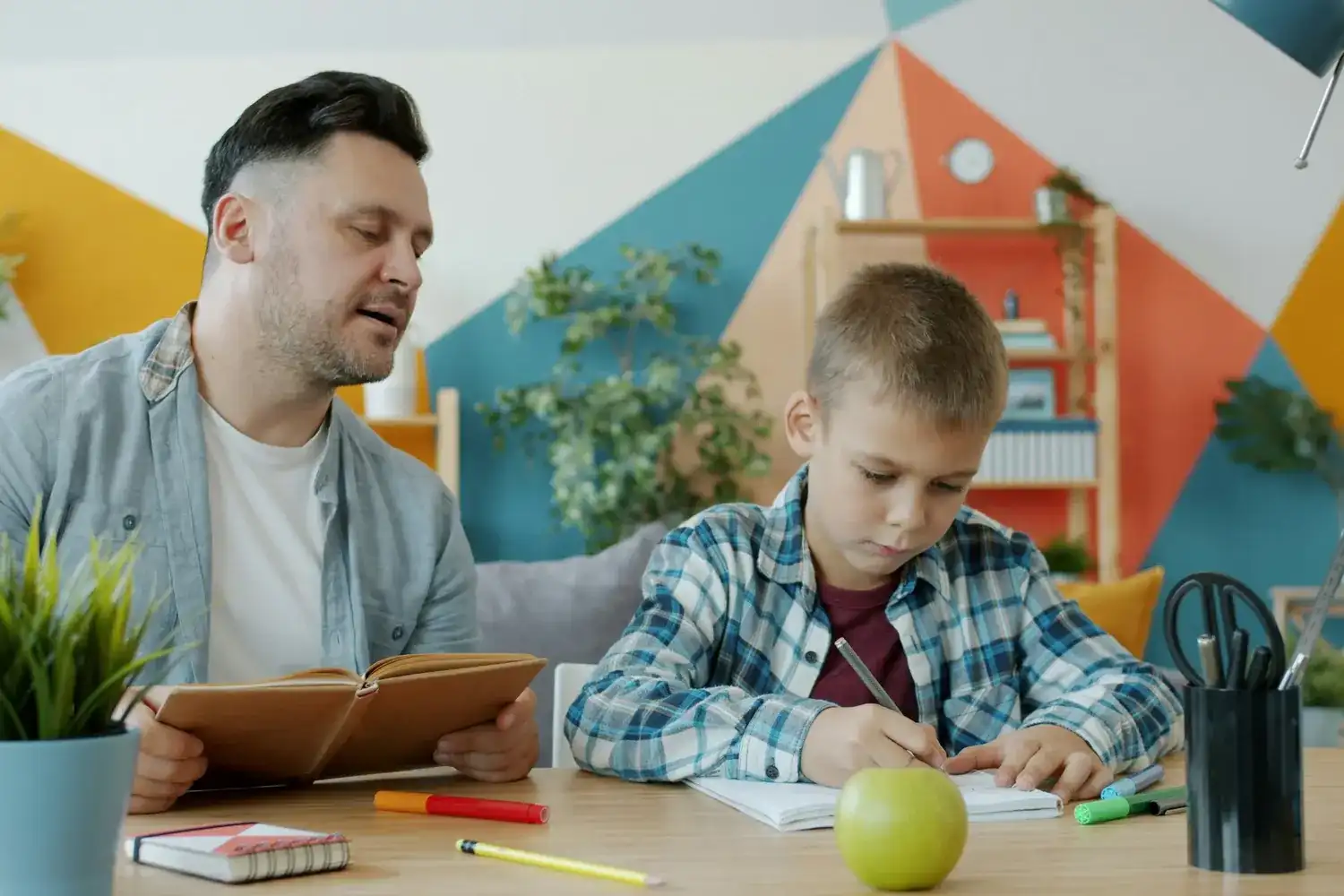
Lessons together
The children join the same lesson, each doing activities that suit their level.
- The focus is on things the children can do side by side: conversation, games and reading aloud
- When ages or levels differ, the tutor gives each child a different role or harder or easier questions
- Hearing a sibling speak can be a useful push for both of them
Separate lessons
Each child has their own one-to-one time.
- A good fit when school years, goals or English levels are quite different
- The same tutor may be able to take both children, depending on availability
- Different school syllabuses or Eiken grades can each be followed in full
A mix of both
Within one lesson, some time is shared and some is one-to-one for each child.
- For example, everyone starts with some English together, then each child moves on to school work or Eiken preparation
- Shared and individual parts stay separate
- How the time is split is something we adjust together as we see how it goes
Not every arrangement is available with every family or every tutor. We check tutor fit, availability and lesson format first, then tell you what is possible.
Choosing by your children's situation
A rough guide for when you are unsure. In practice we decide with you after looking at the children and the tutor's strengths.
Close in age and in English level
- Together
- Usually a good fit
- Separately
- Works too
- A mix
- Works too
Different ages or levels
- Together
- Needs careful planning
- Separately
- Usually a good fit
- A mix
- Usually a good fit
Same goal (such as getting used to speaking)
- Together
- Usually a good fit
- Separately
- Works too
- A mix
- Usually a good fit
Different goals (such as Eiken and school work)
- Together
- Hard to give each goal time
- Separately
- Usually a good fit
- A mix
- Usually a good fit
Different attention spans
- Together
- Timing needs adjusting
- Separately
- Usually a good fit
- A mix
- Easy to adjust
This table is a general guide and varies with each child and tutor. It is not a promise that any arrangement will be available.
What this could look like
Illustrations These are illustrations of situations that could arise. They are not real families and do not show results.
A second-grader and a fifth-grader, both new to English
Arrangement that could work: Together, or a mix
Songs and games could be shared. The older child might review phonics or read a short text, while the younger one gets used to sounds and words.
A sixth-grader and a first-year junior high student with different goals
Arrangement that could work: Separately, or a mix
If one is preparing for Eiken or junior high and the other is supporting school lessons and tests, each gets their own time. A few minutes of shared conversation at the start is something we can discuss.
A fourth-grader and a second-year junior high student with a big gap in level
Arrangement that could work: Separately
When the content is far apart, it works better not to force it together. Each child covers what they need, and whether back-to-back lessons on the same day are possible depends on the tutor's availability.
By goal: conversation, school English and more
What you are aiming for affects what can be done together and what is easier to separate.
- GoalGetting used to English and speaking more (conversation)How it could runThis is the area that works best together. Conversation and games let the tutor ask each child questions at their own level.
- GoalSupporting school lessons and tests (school English)How it could runSchool years differ in syllabus and textbook, so individual time for each child is likely to work better.
- GoalPreparing for EikenHow it could runIf the children are aiming for different grades, individual time makes sense. If they are aiming for the same grade, we can discuss whether to prepare together.
- GoalDifferent goals, but both feel unsure about EnglishHow it could runWe can start with some time together to enjoy English, then move to individual time.
These are only examples. We suggest an approach after hearing about each child's goals and level.
Scheduling and fees
Here is what we can say now, and what we confirm with you first.
- Scheduling
- Tell us your preferred days and times and we will match them with the tutor's availability. If you would like the children to have lessons back to back on the same day, let us know. We cannot always meet every request.
- Rescheduling
- If you ask in advance, we will adjust where the tutor's availability allows.
- Online
- Lessons can be taken online. Joining from home means no travelling, and it can make it easier to fit the children's schedules together.
- In person
- In-person lessons in Tokyo are offered where location, day, time and the tutor's travel allow.
- Enrolment and materials
- There is no enrolment fee, and in principle no materials fee.
- Lesson fees
- Fees can vary with the tutor, content and lesson format. Guide prices are on the pricing page.
- Fees for siblings
- We do not have confirmed terms to publish here for shared lessons, mixed lessons or a sibling discount. Once the tutor and format are confirmed, we will explain this at the trial or when you get in touch.
- Free trial
- You do not have to enrol after the trial. Tell us how you would like to take it, with all the children together or with one child first.
How getting in touch works
- Tell us about your childrenLet us know how many, their ages or school years, their goals and how you imagine lessons running, as far as you know.
- We check the tutor and formatWe see whether a suitable tutor is available and whether the arrangement you have in mind is possible. If it is not, we say so.
- We suggest how it could runFrom together, separately or a mix, we explain what is possible, with scheduling and fees.
- A free trial to see how it feelsAfter the trial, you decide at home whether to continue.
What we cannot promise
- That every arrangement (together, separate or a mix) is always available
- That one tutor can take all of the children, or that a preferred day and time is free
- A sibling discount or special fee
- Better grades or scores
We answer each of these one by one, once we have checked the tutor and the details.
Tell us about your children
Choose how many children, their ages and how you would like lessons to run, and the enquiry form opens with this already written in the message box. You can check and change it there. Nothing is sent until you submit the form.
Questions about lessons for brothers and sisters
Can siblings have lessons together?
Yes, please ask. Besides lessons together, there are separate lessons and a mix of shared and individual time. Which is possible depends on the tutor and the lesson format, and we confirm that with you. It may not be available for every family or tutor.
Is it all right if there is a big age gap?
Please ask. With a large age gap, the tutor can give each child questions at their own level within one activity, or give each their own time. Keeping lessons separate is also an option, and often a sensible one.
Can we do lessons together if the English levels differ?
When levels differ, we think about which activities both can enjoy and which content is better done individually. If the gap is large, separate lessons are sometimes easier to run. We suggest an approach after hearing about the children.
Can both children have the same tutor?
Sometimes. It depends on the tutor's availability and on how well they suit each child's goals. If different tutors suit each child better, we may suggest that instead.
Are lessons online or in person?
Lessons can be online, and the children can join from the same place. In-person lessons in Tokyo are offered where location, day, time and the tutor's travel allow.
Is there a sibling discount?
We do not have a confirmed sibling discount or special fee to publish on this page. We will explain the fee, including for lessons together, once the tutor and format are confirmed, at the trial or when you get in touch. There is no enrolment fee.
Does each child get less time if we have lessons together?
With lessons together or a mix, how the time is used differs from child to child. The length and split depend on how many children there are, their ages and the content, so we confirm this when you get in touch.
Can the children take the trial lesson together?
Let us know how you would like to do it. We can talk about whether all the children join or one goes first. You do not have to enrol after the trial.
Can we switch from lessons together to separate ones later?
Yes, you can ask us to review the arrangement as we see how the children get on. What can change depends on the tutor's availability. If the tutor or approach is not working, you can also ask about changing tutor.
Why not talk to us about your children?
Tell us how many children there are, their ages and anything on your mind. We will check which of together, separate or a mix is possible and let you know.