What the research shows
The Education Endowment Foundation's summary of one to one tuition indicates that tuition tends to work best when it targets a specific weakness and is clearly linked to normal lessons. There is no simple conclusion that online or in-person is always better.
Decide the learning goal first
Decide which of these you most want to change.
- Understanding maths word problems
- Getting feedback on writing
- Practising Eiken speaking
- Organising school homework together
The goal changes the environment you need. Some tasks work fine with screen sharing, while for others it is easier to look at paper materials and handwork together.
When online works well
If no teacher who knows the subject or curriculum lives nearby, online widens the candidates. With no travel, it can be easier to set a fixed time even on a school day.
Writing correction, past papers, school tasks that can be shared on screen and speaking practice are easy to run online. It does need a good connection, a device and the child's focus on a screen.
When in-person works well
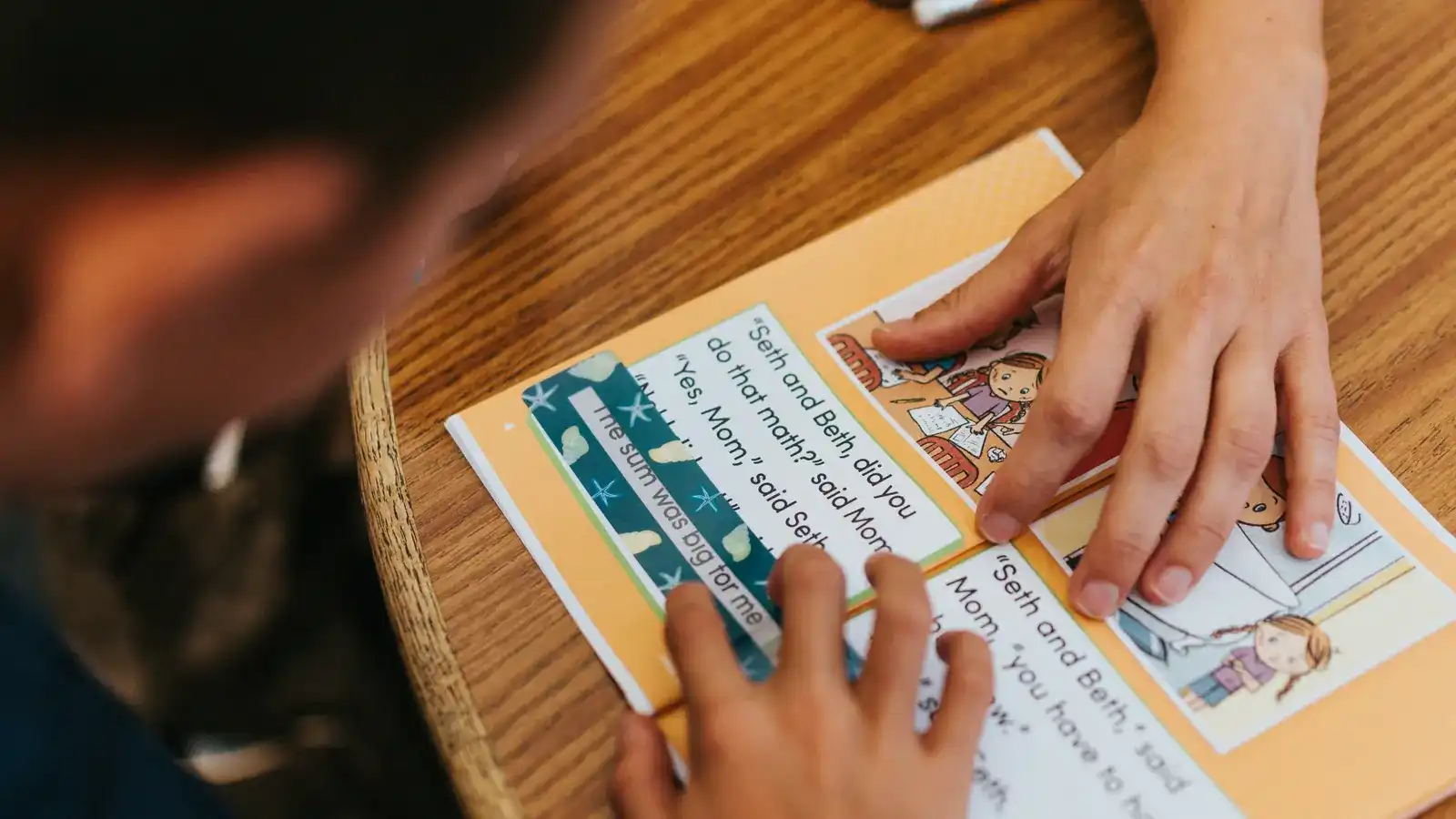
For young children who find it hard to concentrate on explanations through a screen, or when paper materials, figures and handwritten working come up often, being in the same space can help. Some children find it easier to build a relationship with the teacher.
On the other hand, long travel can make it hard to keep up the lesson frequency.
Look at teacher quality before format
In the EEF research on one to one tuition, what matters is narrowing the learning task, linking it to normal lessons and checking progress. Even in person, a lesson that solves only generic problems without looking at the child's difficulty can miss its purpose.
Online too, a teacher who shares school materials, checks understanding, gives feedback and decides the next task can give high-quality support. Look at what happens during the lesson rather than the format. See also how parents can judge tutoring quality.
Calculate travel time and frequency
Even if an in-person lesson is 60 minutes, a 60-minute round trip makes the load on the whole family 120 minutes. Online has no travel but needs a quiet place at home.
The realistic format also changes depending on whether you continue weekly for six months or only twice a week before exams.
Try it for two weeks only
If undecided, try the format for a short period if possible. Check these five points.
The wider picture of choosing a teacher is in 8 things to check before looking for a tutor in Amsterdam.
Summary
Online and in-person each have convenient situations. What matters is not choosing a format but being able to keep up the subject support you need, with a good teacher, at a frequency that is not a strain. Compare learning goal, materials, focus, travel, frequency and teacher quality, and check for real change in the first few lessons.
This article sets out how to choose. It does not announce current Petra Tutors in-person service in the Netherlands.