
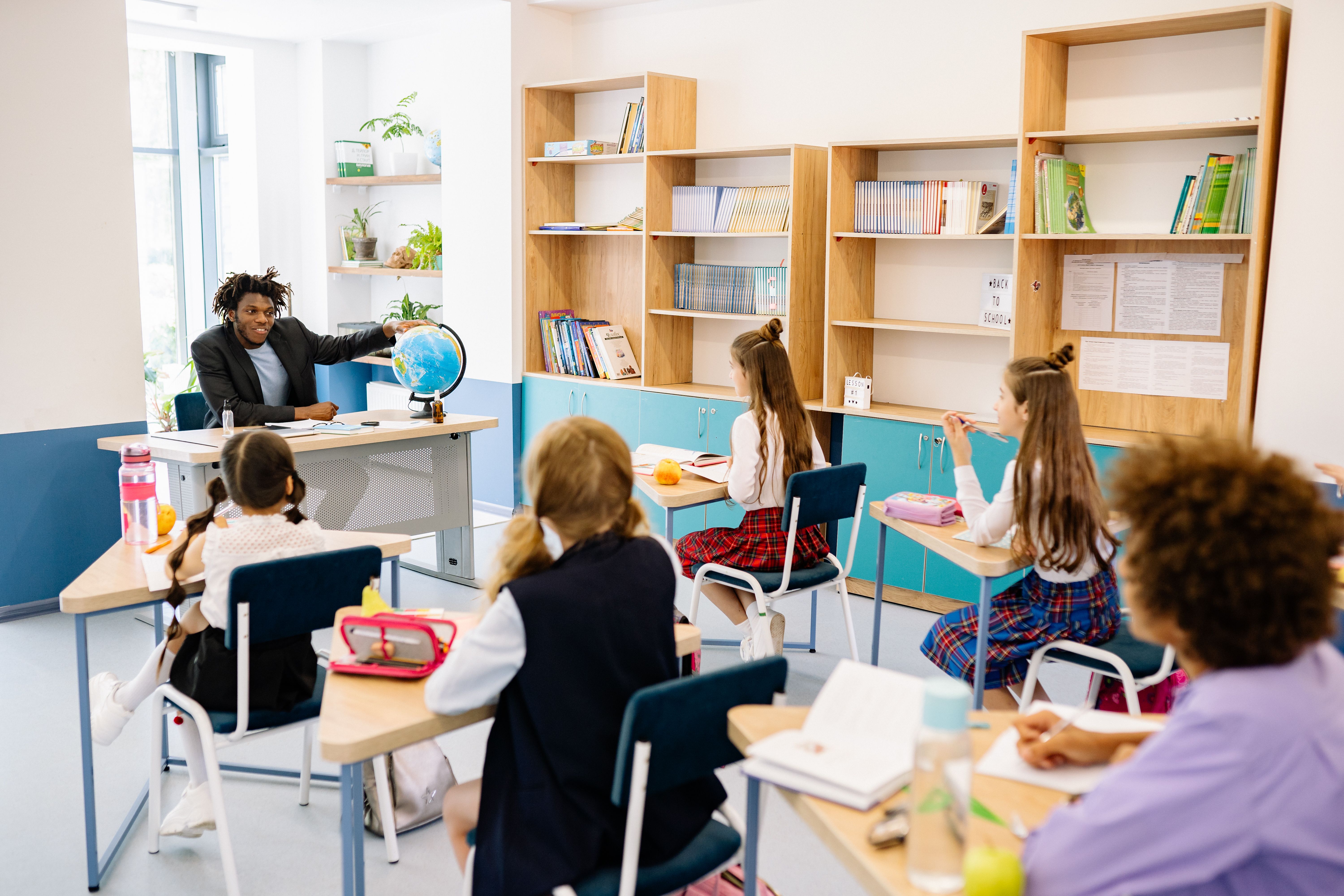
At home, try choosing one school problem and asking “What is happening in this story?” in Japanese before discussing the calculation. Petra Tutors can discuss mathematics learning support based on school materials and your child's understanding. Browse tutor profiles and maths tutoring.
Is the difficulty English or the mathematical idea?
A child who can explain a numerical problem in Japanese but not English needs different support from one who struggles to decide on an equation even without the words. Ask the child to describe the problem in a familiar language to separate comprehension from calculation.
| What you notice | What to examine | Something to try at home |
|---|---|---|
| Can solve the equation but not the word problem | Understanding the English instructions | Restate the situation in a short sentence |
| Struggles with the equation even in Japanese | Understanding quantities and comparisons | Use counters or drawings |
| Finds the numbers but not the task | What the question is asking for | Circle the unknown quantity |
| Gets an answer but cannot explain it | Understanding the meaning of the equation | Check whether the answer fits the story |
Understanding word problems involves not only specialised mathematics vocabulary but the people, objects and sequence of events in a sentence. Begin with a short and familiar situation.
Before calculating, separate the sentence into known quantities, what changes, and the unknown quantity.
Common English expressions in primary-school word problems
| English expression | Meaning | What to notice |
|---|---|---|
| altogether | in total | Which quantities are being combined? |
| each | for every one | How many equal groups are involved? |
| more than | a greater amount | Which quantity is larger? |
| fewer than | a smaller number | Which quantity is smaller? |
| left | remaining | What remains after a change? |
| difference | the gap between numbers | How far apart are the quantities? |
| total | sum or combined amount | What exactly is being totalled? |
Do not decide to add or subtract just because one keyword appears. Drawing who has how many objects can clarify the meaning. The next two questions use “fewer than” but require different calculations.
The same 'five fewer' relationship can mean different equations
Question A: “Sofia has 12 stickers. Ben has 5 fewer stickers than Sofia. How many stickers does Ben have?”
Ben has fewer, so 12 − 5 = 7 stickers. In a drawing, Ben's row has five fewer stickers than Sofia's row of twelve.
Question B: “Ben has 7 stickers. This is 5 fewer than Sofia has. How many stickers does Sofia have?”
Now Sofia has five more, so 7 + 5 = 12 stickers. Saying first whose quantity is larger makes the equation easier to choose.
| What to compare | Question A | Question B |
|---|---|---|
| Known number | Sofia has 12 | Ben has 7 |
| Who has five fewer? | Ben | Ben |
| Unknown number | Ben's quantity | Sofia's quantity |
| Equation and answer | 12 − 5 = 7 | 7 + 5 = 12 |
Does 'each' always signal multiplication?
Try this original problem: “There are 4 bags. Each bag has 6 marbles. How many marbles are there altogether?”
“Each” tells us every bag contains six marbles. With four bags, 6 × 4 = 24 marbles. Draw four bags with six dots in each to make the multiplication meaningful.
| Information in the English | Meaning | Mathematical representation |
|---|---|---|
| 4 bags | Four equal groups | 4 groups |
| 6 marbles in each bag | Six in every group | 6 per group |
| altogether | All the marbles | 6 × 4 = 24 |
But “each” can also appear in a division problem. If 24 marbles are divided evenly among four bags, each bag receives 24 ÷ 4 = 6 marbles. The operation depends on the situation and the unknown quantity.
What do cm, kg and minutes tell us?
Numbers in word problems often come with units. They tell us what the number measures—distance, weight, time or volume. Read the number and unit together before calculating.
| English unit | What it measures | Everyday example |
|---|---|---|
| centimetre (UK), centimeter (US) | Length | A pencil |
| metre (UK), meter (US) | Length | The width of a classroom |
| gram | Weight or mass | A piece of fruit |
| kilogram | Weight or mass | A school bag |
| minute | Time | A lesson |
| litre (UK), liter (US) | Volume | A bottle of water |
In “A ribbon is 20 centimetres long,” the number 20 describes a length. British and American spelling may differ in your school's materials, but the measured quantity is the same.
Practise questions about time and length
Try a time question: “A lesson starts at 9:15 and lasts 45 minutes. When does it end?”
Add 45 minutes to 9:15. Since 15 + 45 = 60 minutes, the lesson ends at 10:00. “Lasts” describes the duration, while “starts” identifies the beginning.
| English expression | Meaning | Clue |
|---|---|---|
| starts at | Beginning time | 9:15 |
| lasts | Duration | 45 minutes |
| When does it end? | Unknown finishing time | 10:00 |
For length, try “A rope is 80 centimetres long. We cut off 25 centimetres. How much is left?” 80 − 25 = 55. Include “centimetres” in the final answer.
A one-week home routine for reading maths problems
- On Monday, choose two words from a word problem and discuss their meaning.
- On Wednesday, show the same problem with a drawing or blocks.
- On Friday, solve a similar question with different numbers.
- At the weekend, explain why the equation works in English or Japanese.
Check not only whether the answer is correct but whether the child understands the question. Discussing even one short problem can reveal how they are reasoning.
Explaining an answer reveals deeper understanding
Mathematical understanding cannot be measured by a correct equation alone. Ask “Why did you choose that equation?” to see how your child understands quantities and relationships. They may explain in Japanese, with a drawing or by pointing.
| After solving | Question to ask | What an explanation might show |
|---|---|---|
| A comparison problem | Which quantity was greater? | Understanding of the two amounts |
| A multiplication problem | How many groups, and how many in each? | Group size and number of groups |
| A time problem | Where are the start time and the duration? | Difference between time of day and elapsed time |
Once the child can explain the equation, change the numbers slightly while keeping the same story. This reveals whether they understand the reasoning rather than remembering one answer.
A useful home goal: after solving, explain what each number in the equation represents.
Education references
English maths word problems become more approachable when children first understand the situation. To discuss practice based on your child's school materials, see Petra Tutors' tutor profiles and maths learning support. Confirm individual tutors' year-group and subject coverage when enquiring.