
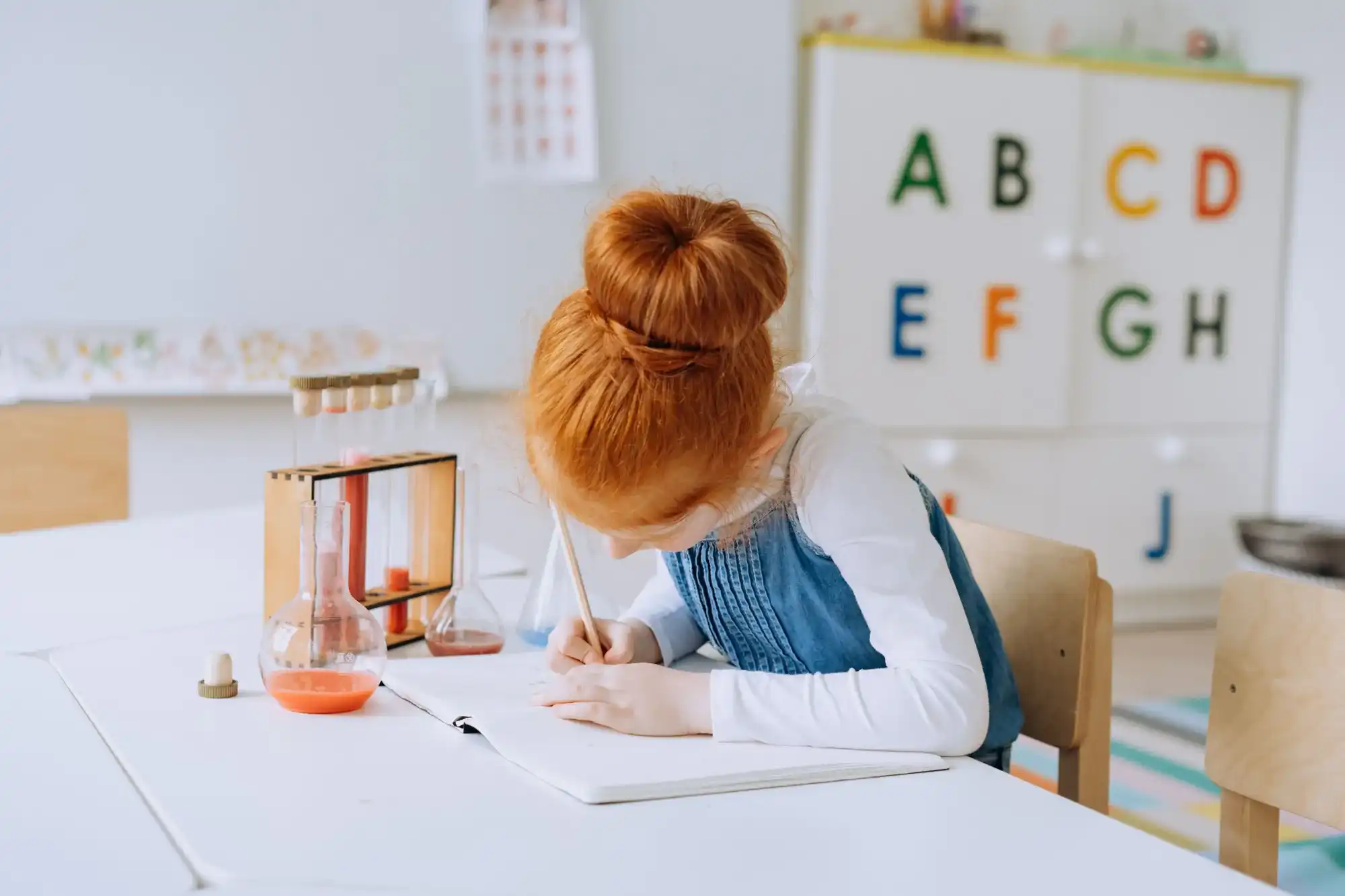
Before: predict
'Heavy things sink. An apple is heavy, so I think it will sink.'
Netherlands · Ages about 6 to 9 · Observation and experiments
Many Dutch primary schools meet science through world orientation lessons (wereldoriëntatie), and international schools in the Amsterdam area use inquiry-based approaches in English. At this age the habit matters more than the vocabulary: look closely, compare, predict, say what you saw. We use safe, everyday things at home, with a parent nearby, and test “why?” together.
We ask your child's age and what school is covering. Whether a suitable tutor is available is confirmed after we read your enquiry; matching depends on availability.
A science foundation comes from seeing and thinking for yourself, not from memorising results.
Parents are not always sure how to meet a child's questions, especially in a second language.
Colour, shape, number and change are seen, but putting them into words is hard.
Words learned in Dutch or English at school are hard to connect with the language spoken at home.
Many families are unsure which materials to choose and how closely to supervise.
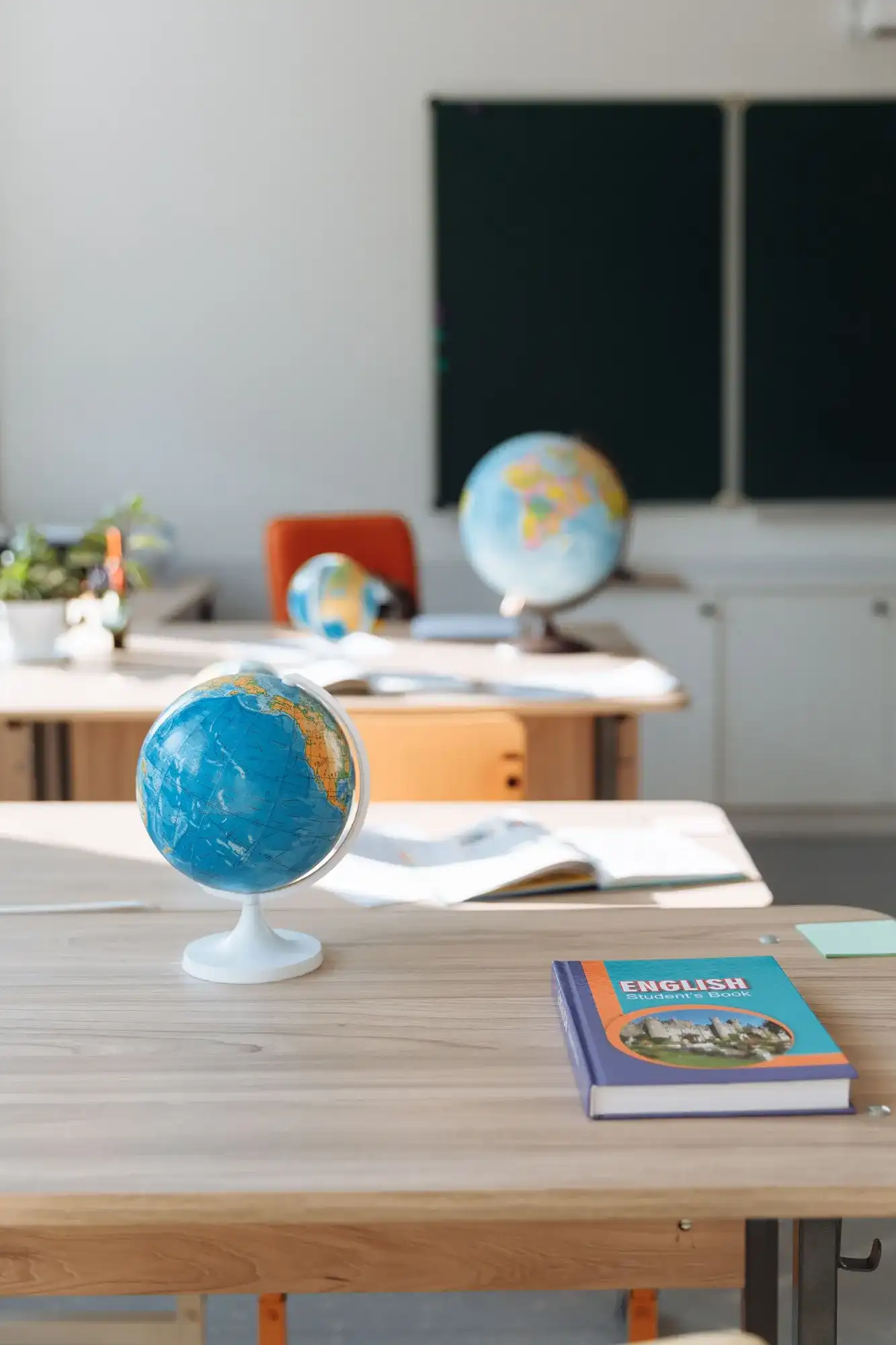
Fill a bowl with water, add one everyday item at a time, and compare what you expected with what happened.
Activity written for this page (not a real pupil's record)
We place a wooden spoon, a sponge, an apple and a metal spoon in water. Which ones float?
Before: predict
'Heavy things sink. An apple is heavy, so I think it will sink.'
After: look and revise
The apple floated. The sponge floated. The metal spoon sank. 'Maybe it is not only about weight,' and the first idea is rewritten.
The reason matters more than being right.
A wrong prediction is fine. Changing your mind is where scientific thinking starts.
'Why did something so big still float?' leads to the next test.
Always with an adult nearby. We avoid small objects that could be swallowed, glass, electricity, fire, chemicals and anything that is dangerous when mixed.
Before the vocabulary comes a way of thinking, and it grows in a set order. Every session uses one or more rungs of this ladder.
Colour, shape, size, texture: say what you can see, exactly as it is.
Put two things side by side and find what is the same and what is different.
“I think this will happen because...” with a reason in one short sentence.
Try it and look at how the result differs from the guess.
Say what you found and write down one new “what if” question.
A wrong prediction is welcome. Being able to rewrite an idea is the real skill.
“It floated” and “it sank” are enough. Technical terms are added after the experience.
We are not pushing through school units early. We build the habit of observing and explaining.
Four steps (look, compare, describe, ask a new question) and a sheet a child can fill in alone.
| Item | Prediction | What I saw | New question |
|---|---|---|---|
| Apple | Sink | Floated | What happens if we cut it? |
| Sponge | Float | Floated and soaked up water | What if I squeeze it? |
| Wooden spoon | Float | Floated | How is it different from the metal spoon? |
| Metal spoon | Sink | Sank | Could a different shape float? |
Drawing, single words or sentences are all fine.
We choose activities for your child's age and what you have at home.
Today's question, the items and how an adult will supervise.
A drawing or a few words.
Watch what happens and fill in the sheet.
Say what was found and choose one thing to test next.
With young children safety comes first, and we explain it to parents before we begin.
Water, paper, a sponge, fruit. No glass, flame, electricity, chemicals or items small enough to swallow.
At home a parent is in the room. Online, the tutor also watches what is happening beyond the screen.
Keep a towel for spills. Putting things back is counted as part of the activity.
We tell you what is needed the day before, so that everything comes from your own home.
If the room or your child's mood does not suit an activity, we swap it for another.
A child who finds writing hard can start with a picture or a single word.
A made-up example to show the format. It is not a real child's record.
Gives a reason for each prediction in their own words.
Finds it hard to describe what they saw using colour, shape or size.
At bath time, ask 'what do you think will happen?' before each toy goes in.
Illustrative only. The real format is agreed with each family.
Choose the one closest to your child's age and to what you want to learn.
Ages about 6 to 9, where the goal is the habit of observing, thinking and talking rather than technical vocabulary.
If you want help with a specific school unit, see our science tutoring page, where we confirm subject and year first.
For support that follows an international school's curriculum, the international school page is closer.
Plain information before you decide.
Grades 1 and 2 follow Life Studies and science as a subject starts in Grade 3, so we do not push ahead.
The aim is to look, think and explain, not to build a gadget.
Schools and children differ, so we promise no particular outcome.
The right tutor depends on whether your child attends a Dutch or an international school, the language of instruction and the language used at home. Before we suggest anyone we check the following.
Whether a tutor is comfortable with early observation work and, later, Grade 3 science.
The items and the adult supervision are agreed beforehand.
Online using everyday items at home, or in person where the area and tutor allow.
Times when your child can concentrate.
We start with a short conversation about your child, their school and what is hard at the moment. Then we suggest a tutor and a way of working. Nothing on this page is a promise of availability.
Your child's age and school year (for example the groep), the school and its language of instruction, and the languages used at home. We do not need schoolwork or sensitive personal details to begin.
If a suitable tutor is available we tell you who we suggest and how lessons would run. If no one is free, we say so plainly.
Lessons can be online across the Netherlands. In-person lessons are offered mainly in Amstelveen and Amsterdam, depending on tutor availability.
Fees depend on the tutor, the content and the lesson format, and are given in euros. We explain them in the free trial lesson or when you contact us. Our pricing page gives the current overview.
Tell us your child's age, school and anything that worries you. We will explain what is possible online or, in Amstelveen and Amsterdam, in person, and whether a suitable tutor is available.
These are questions families in the Netherlands often ask before they get in touch.
As far as you can share school materials or tasks, yes. Content and wording differ by school, so we ask which school your child attends.
That depends on your preference and the tutor. We can check the idea in a language your child knows well and also learn the words used at school.
No. We mostly use a bowl, water, a towel and ordinary things from home. We tell you in advance.
An adult stays nearby throughout. We do not use small parts, glass, electricity, fire or chemicals.
Yes. We predict and observe over the screen using items you already have.
Observing, recording and comparing a prediction with a result is how science is learnt later. We do not run ahead of the textbook.
We help your child organise their thinking. We do not give answers.
We choose activities that need only things you already have. We list anything required the day before, and we do not expect you to buy equipment.
Yes. The tutor watches your child's work on screen and supports it with questions. For safety we ask that a parent stays in the room.
At this age the aim is to keep the feeling of “that is curious” alive more than to raise grades. Whether lessons are needed is something we decide with you after hearing how your child is.