
Netherlands, ages 3 to 6, maths
Early Years maths tutoring in Amsterdam and Amstelveen
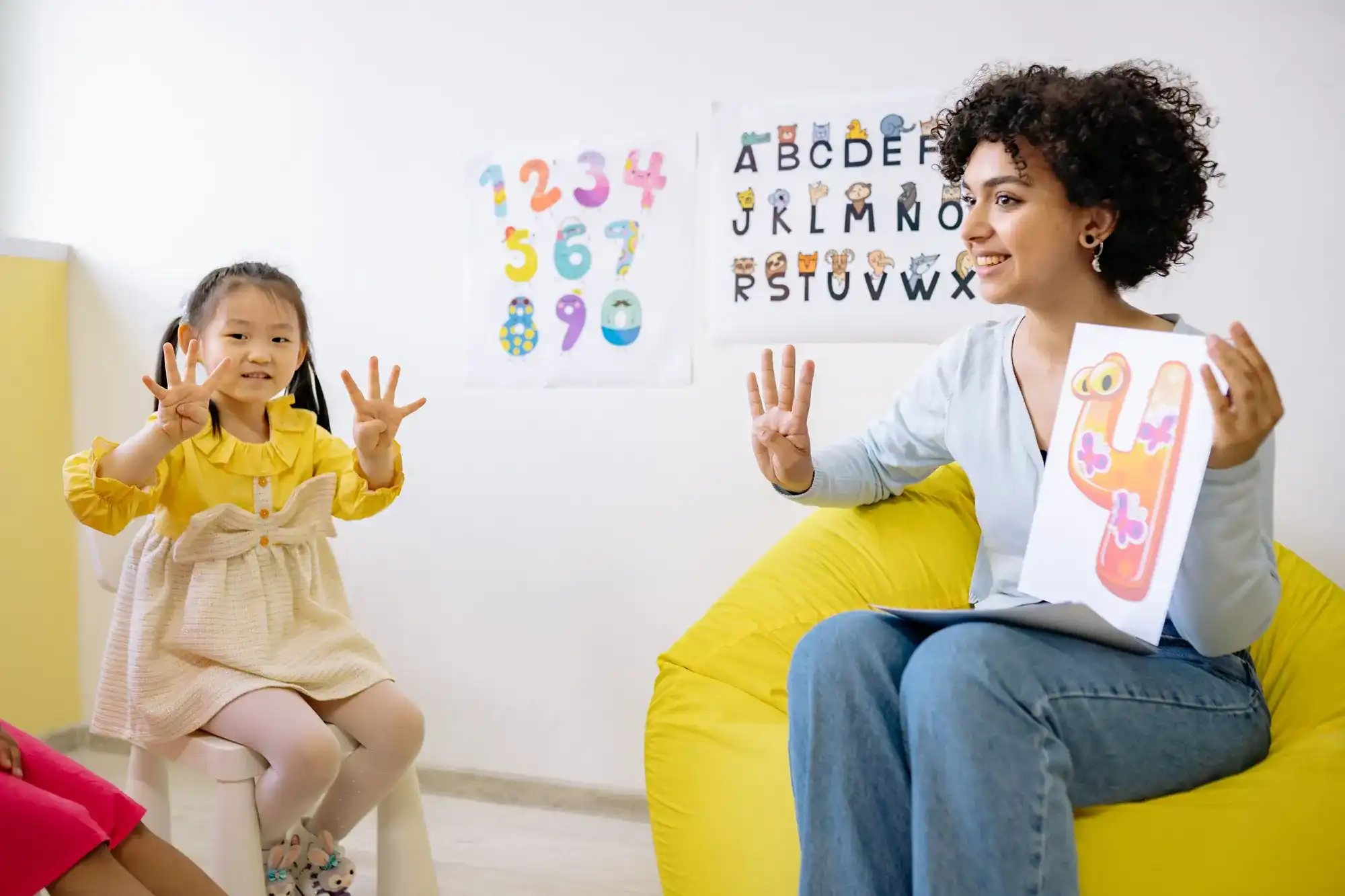
Dutch children can start primary school at four, and the first two years, groep 1 and 2, learn number, language and the world around them through play. We support that stage one to one, in English or Japanese, with large blocks and everyday objects, listening closely to what your child says.
We ask about your child's school and the languages at home, and check the fit before we suggest a tutor.
Meet some of our tutors
Some of our tutors with experience of younger learners and of teaching maths.
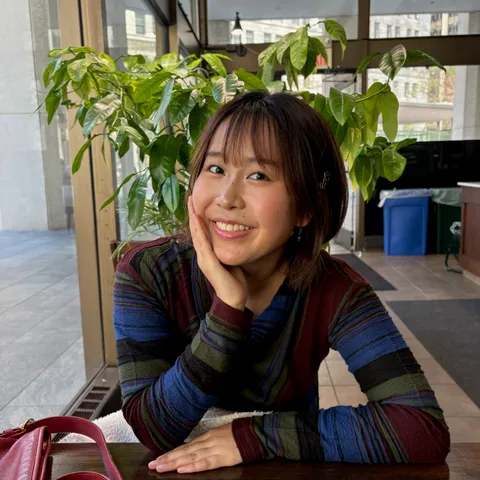
Mizuki
English, maths & primary to secondary
Matched after your enquiry
Teaches English and maths at each child's own pace, with experience of supporting younger learners.
View tutor profile →
Nikko
Conversation, EIKEN, IELTS/TOEFL & school English
Matched after your enquiry
Teaches from preschool age to adults, has looked after children aged about 1 to 13, and has helped with primary-level maths in English.
View tutor profile →
We settle the tutor, format and times together with you after hearing about your child's age and what you hope for, so please get in touch whenever you are ready.
When families get in touch
Families in the Amsterdam area often come to us with questions like these.
Not sure what groep 1 and 2 are teaching
Learning through play in Dutch can be hard to see from home.
Maths words in a Dutch-medium school
Families would like number and shape to be talked about in English or Japanese too, in a relaxed way.
A child at an international school's Early Years
Families want to connect comfortably with the number activities done in English.
Keeping options open
Including a possible move to another country or school system, families want solid foundations without pressure.

Activities for ages 3 to 4 and ages 5 to 6
Ages are a guide. How age maps to groep varies by school, and neither is the same as a year group in another country.
| Learning area | Ages 3 to 4 (around groep 1) | Ages 5 to 6 (around groep 2) | What the tutor looks for |
|---|---|---|---|
| Counting and one-to-one matching | Pointing and counting objects one at a time, up to about 5 | Counting to 10 when the layout changes; answering "how many altogether?" | Whether pointing and the counting words match |
| More, fewer, the same | Two groups side by side: "which has more?" | Does the number stay the same when the layout changes? "How many more to match?" | Whether the child can give a reason in their own words |
| Shapes and sorting | Sorting by colour, shape or size | Sorting by two rules and explaining the rule | Whether the child keeps to a rule until the end |
| Order and position | Up, down, next to, in front, behind, shown with the body | First and second; left and right; describing an order | Whether words and movement connect |
| Parts of a number | Splitting objects into two groups to make 3 | Splitting 5 as 2 and 3, or 1 and 4 | Whether the child looks for another way to split |
What schools teach, and the words they use, differ from school to school. We adjust activities to what you tell us about your child's school.
A first lesson example: red blocks and blue blocks
The same materials change with age: the tutor's questions and what we watch for are different. Use the tabs to switch age.
An example written for this page, not a real child's lesson
Ages 3 to 4
Two red blocks and three blue blocks are set in front of the child. We start with a feel for "more" before counting.
- Materials
- Large blocks or bricks that are hard to put in the mouth. No buttons or small parts.
- Tutor's questions
- "Which has more, red or blue?" "How did you know?"
- What the child does
- Points, lines the blocks up one by one, or gestures towards one group. Words are not required to show thinking.
- What we look for
- Whether pointing and counting words match, in whichever language the child counts, and whether counting connects to a feel for quantity.
- Next lesson
- Change the line into a circle and test whether the number stays the same when it looks different.
Ages 5 to 6
Five blocks and two small boxes. The focus moves from counting to ways of splitting and giving reasons.
- Materials
- Five of the same large blocks and two small boxes.
- Tutor's questions
- "Share the five blocks between the boxes. Is there another way?" "If we move them, is it still the same number?"
- What the child does
- Splits 2 and 3, then 1 and 4; rearranges and recounts.
- What we look for
- After finding a split, can the child say why it is still five, in a language they are comfortable in?
- Next lesson
- If finding splits is fun, move to six or seven. If it is shaky, go back to three or four.
This shows how a lesson might run. It is not a promise of results.
How this fits with groep 1 and 2
Dutch schools' approach can be checked in public sources. This page does not replace your school's curriculum.
Starting school in the Netherlands
According to the government, a child may start primary school at four, and compulsory education begins on the first day of the month after the fifth birthday. Groep 1 and 2 are mainly for ages 4 to 6.
What SLO describes
SLO lists number, size, addition and subtraction, shape and position as early maths content, and groep 1 and 2 learning is described as largely play-based. The activities on this page follow that thinking.
Working with your school, not across it
We ask about your child's teacher's approach and keep home activities pointing the same way. We do not handle school homework or school materials.
Official sources (checked 10 November 2026; please check the sites for the latest)
What sharing progress could look like
These are made-up examples to show how we share. They are not a real child's record.
What we saw (example)
Counted to five while pointing at each block. When asked which group had more, recounted before answering.
Next practice (example)
Check whether the number stays the same when the blocks are in a circle or in two rows.
At home (example)
When counting stairs or shopping items, ask "how many more?" once, in any language you use. There is no need to hurry the answer.
These are examples only. Updates to families are in English or Japanese.
From first message to first lesson
We check the fit as we go, without pressure.
Getting in touch
Tell us your child's age, school, the languages used at home and what you hope for.
Checking for a tutor
We check whether a suitable tutor is available, and suggest one if so.
A first lesson
We confirm the current arrangements for a first lesson when you contact us.
Deciding whether to continue
Whether to continue is your decision.
Sharing with you
If you continue, a short note in English or Japanese tells you what we saw and what comes next.
What this support covers
A few things worth knowing before you decide.
In English or Japanese
Lessons are in English or Japanese, so your child can talk about number and shape in a home language too.
Specialist support for concerns
For questions about development or learning differences, your school or a specialist is the right person to speak to.
Number through play, at your child's pace
We follow your child's curiosity into number and shape rather than pushing textbook content.
We check that the tutor fits a young child
Matching depends on your child's age, the languages used at home and at school, and how your child learns best. Before we suggest anyone we check the following.
Experience with ages 3 to 6
We check real experience of working with very young children.
Language of the lesson
English or Japanese, depending on your wishes and the tutor. Dutch-language lessons are not offered.
Format and place
Online, or in person around Amstelveen and Amsterdam, depending on the tutor.
Timing
Around your child's school day, at a time when they are settled and alert.
What we confirm before lessons begin
We start with a short conversation about your child. Then we suggest a tutor and a way of working. Petra is accepting students in the Netherlands. Nothing on this page is a promise of a place at a school or a result.
What we ask you
Your child's age, the languages spoken at home and at school, and what you would like help with. To begin, your child's age and a few details are enough.
Suggesting a tutor
We tell you which tutor we suggest and how a lesson would run, then settle the place and times with you. Online or in person, we look for the way that suits your family.
Online or in person
Lessons can be online across the Netherlands. In-person lessons are offered mainly in Amstelveen and Amsterdam, depending on tutor availability.
Price and first lesson
Fees depend on the tutor and the lesson format. When you contact us we confirm the current Netherlands prices and what is available for a first lesson. Our pricing page gives the current overview.
Tell us about your child
and we will go through it with you
Tell us your child's age, school and the languages used at home, as far as you know. We will explain what is possible and whether a suitable tutor is available.
Questions about preschool maths in the Netherlands
These are questions families often ask before they get in touch.
Are groep 1 and 2 the same as Early Years elsewhere?
Not exactly. How age maps to year groups differs between countries and schools. We look at what your child can do now, not only at age.
Can we have lessons if our school teaches in Dutch?
Yes. Lessons are in English or Japanese, and give your child time to talk about number and shape in a home language too. We do not offer lessons in Dutch.
Should a parent stay in the room?
It depends on age and temperament. Many families stay close for the first lesson and then agree how to step back.
Do we need special materials?
No. Large blocks or bricks from home are enough, and we avoid small items.
Can lessons be online?
Yes. Screen time is kept short and the activity mostly uses hands and objects at home.
What about prices and a first lesson?
We confirm the current Netherlands prices and arrangements when you contact us. Our pricing page gives the current overview.