

Eri is from Japan and spent ten years in New Zealand before moving back. After the International School of the Sacred Heart she went on to Temple University Japan (TUJ), where she studies psychology. She has been on exchange at the University of East Anglia in England, spent a summer semester at TUJ Kyoto, and now also interns at Petra Tutors.
All 17 questions and answers are here. Articles that add official information for each university or school are linked in the sections below and at the end.
Introduction
From the interview with Eri
Tell us a bit about yourself. How would you describe your background, hobbies and interests?
My name is Eri. I am from Japan, but I grew up in New Zealand for 10 years before coming back to Japan. I enjoy listening to music and I currently play the viola in an orchestra.
Choosing TUJ, applying and studying psychology
Three questions about TUJ: how to choose it, how to prepare an application and what the psychology major is like. Entry requirements, deadlines and tuition are in the TUJ admissions article, with official information.
From the interview with Eri
What should a high school student consider before deciding whether Temple is right for them?
Make sure to see if it is actually right for them personally, rather than just looking at the university’s statistics. Checking the website, looking through the different majors that the university offers and attending an open day will help you decide if it is right for you. Going to an open day really helps because you can see what the campus looks like, meet the Dean and student ambassadors, get a sense of what classes are like and experience the atmosphere of student life. And because TUJ is growing, with a new location called ‘The Hillside Center’ that opened quite recently in Mizonokuchi, Kawasaki, it is very important to see how different or similar the two locations are and get to know how to get to the classrooms.

How did you prepare your application to TUJ, and what advice would you give to high school students going through the application process?
I started writing my personal statement the summer before my senior year and wrote many drafts before submitting it. Because I had only around 250 words to work with in the essay, I wanted to be able to express what I wanted to say but also had to be concise and explain why I would be a good fit for TUJ. TUJ is test-optional so I didn’t have to submit my SAT/TOEFL score when applying. As for transcripts, the university does care about what grades you got in high school and getting all As is good, but what makes you stand out is if you have improved every year. So even if you did not have great grades in your freshman year, as long as you are trying hard and getting higher grades every year, that makes you stand out more.
My advice would be to ask people to check your personal statement. Asking the school guidance counselor, your parents, your older sibling or an English teacher for feedback on what is good and what you can improve can help make your application better. Also, don’t worry too much about grades. If you are worried that you got bad grades in your first year or two in high school, as long as you try hard in your last two years and try to get higher grades, that can make you stand out more and the admissions staff may be more likely to choose you as it shows that you have tried hard.
What do you actually study in the psychology major? Could you walk us through a favourite class?
When studying psychology at TUJ, there are so many different areas you could study, including more of the science side of psychology like neuroscience or more of the developmental side like developmental psychology. One of my favourite classes that I took was called “Child Psychopathology and Treatment” because my interest is more in the development of children and how they behave, so I was able to gain more knowledge and understanding about the theories behind it.
An exchange in the UK
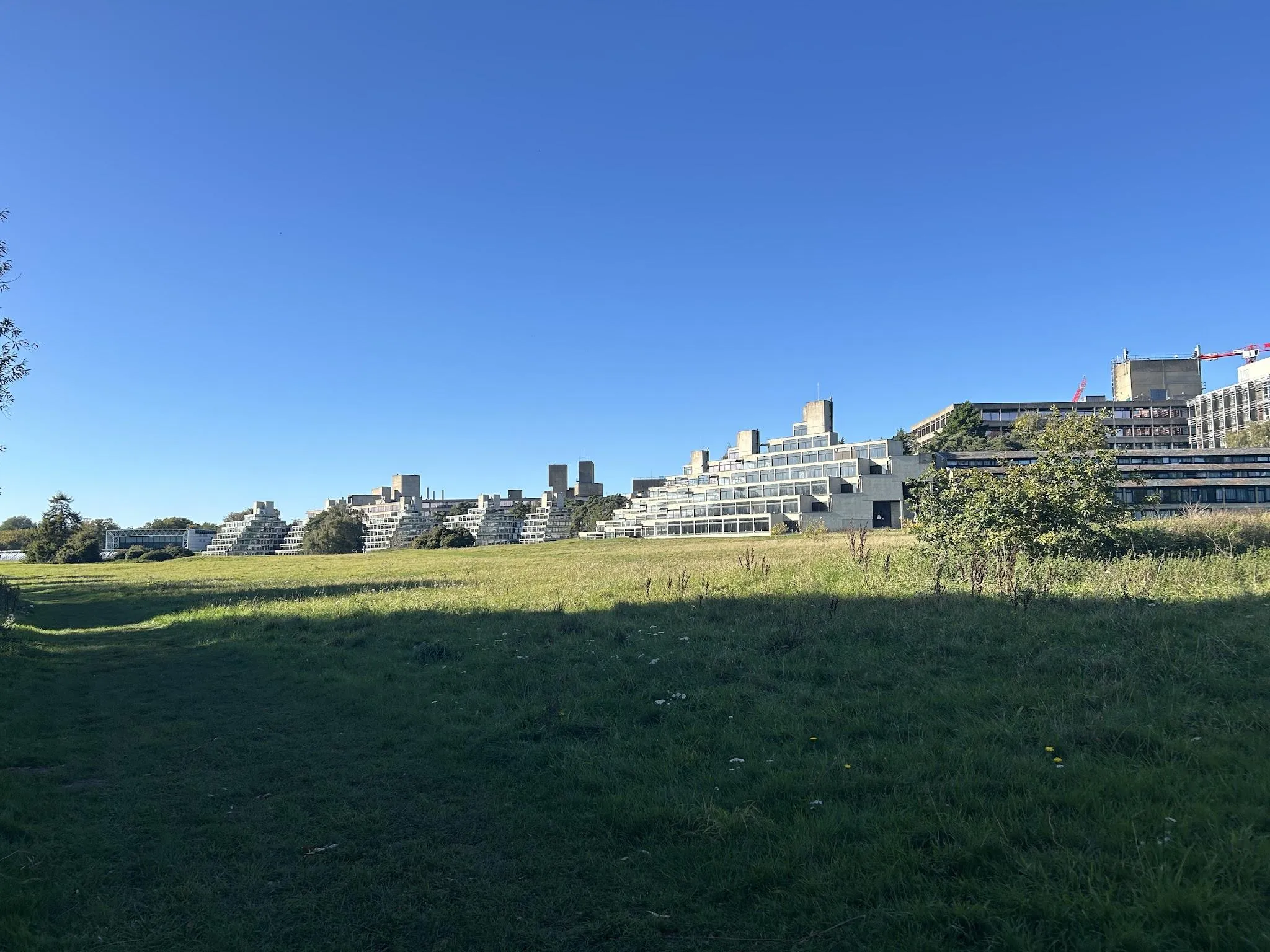
Her time on exchange at the University of East Anglia (UEA), one of TUJ's partner universities. Conditions, housing and visas are in the UEA exchange article; money and making friends are in the UK preparation article.
From the interview with Eri
What was everyday student life at UEA like, both academically and socially? How was your experience living in student accommodation?
From what I have heard, TUJ students on exchange at UEA or in other exchange programmes are limited in the number of credits they can take. I took 3 classes worth 20 credits each (60 credits in total), which is equivalent to 15 credits at TUJ, so I had some time to spend off campus and explore the campus as well. Because the campus was big, I was able to explore quite a lot around there which was nice, especially seeing the seasons change from autumn to winter. I really enjoy nature, so it was nice walking outside. Luckily it wasn’t raining too much when I was there so it was good.
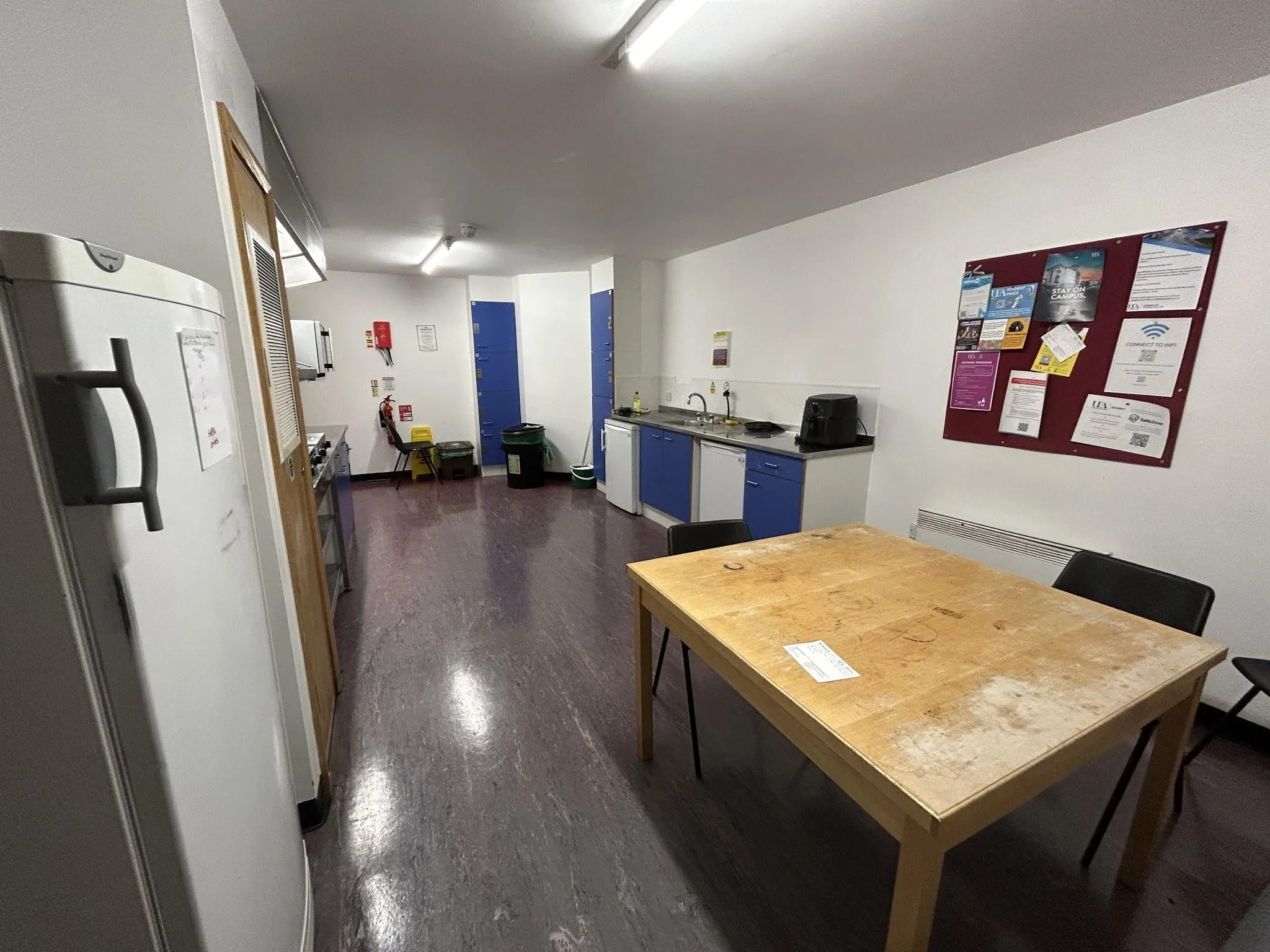
The accommodation was pretty good. I stayed in an on-campus dorm, where we each had our own room but shared the kitchen. There was one dorm that was off-campus that was a 5-minute walk away. And the dorm was a 2-minute walk from the campus centre and was around a 5-minute walk from most of the buildings where classes were held, which I thought was useful.
What was the biggest adjustment you had to make while living in the UK?
I would say the biggest adjustment was the environment. I had never lived in a dorm before, so it was quite different. Luckily, in the dorm where I stayed, we each had our own room, but the kitchen was communal. Sharing the kitchen and fridge was hard because if you didn’t buy your groceries as soon as possible, the space in the fridge would be taken. I think I also had to speak up more. People in the UK are very talkative and most people in Japan keep to themselves so I had to adjust to that.
What do you wish you had known before going on exchange, particularly about budgeting, accommodation and making friends?
I would say to go for it. The first step to actually applying for an exchange program and getting in can be scary as it is a whole different country and adapting to a new environment can be tough. But stepping outside of your comfort zone and putting yourself out there and making new friends can make the experience better. Budgeting is important because Europe is expensive in general, so I had to think about what to buy. I mainly just budgeted for food, so I would buy groceries and cook in my dorm. But I would go out here and there to enjoy the food in the UK.
A summer semester in Kyoto
She spent a summer semester at TUJ Kyoto, the campus that opened in 2025. Official information on the campus and housing is in the TUJ Kyoto article.
From the interview with Eri
What made you decide to spend a summer semester at TUJ Kyoto?
I wanted to experience living in a different prefecture in Japan and wanted to experience living by myself as I had never done that before. So when the new campus opened in Kyoto quite recently, I knew I wanted to spend a semester living alone. I also wanted to know more about the culture in Kyoto and wanted to experience a different campus that was not in Tokyo.
How did studying and living in Kyoto compare with your experience in Tokyo?
I would say that the campus in Kyoto was sort of in the countryside compared to the campus in Tokyo, which I quite liked. Luckily, the dorm I stayed in was around a 10-minute walk away from Kyoto Station so it was quite convenient as there were quite a lot of shops. But I would say that the shopping was quite hard as the closest mall was around a 20–30-minute walk away from the dorm so if I had to buy a lot of groceries, it was quite hard as I had to carry a heavy bag all the way back in the heat and getting a taxi was hard. So I would go to Lawson 100 to buy the bigger groceries as they had most of the things that I needed. The campus is a couple of stations away from Fushimi Inari which can get quite busy on the train but it is a nice place to go to after a long day of classes. Because I spent the summer semester in Kyoto, it was extremely hot compared to Tokyo so I had to put on the air conditioning quite a lot.

What would you recommend to a student considering a semester in Kyoto?
If you want to spend a slightly longer time in Kyoto, I would recommend studying during the fall or spring semester as it is slightly longer than the summer semester and less intense. I would also say that because the Kyoto campus is still quite new, it is sort of a first- and second-year campus as it has mainly first-year courses but it is still developing, still adding more majors and courses so that even fourth years can take courses in the future. But it is a nice campus and I would recommend spending a few semesters there and exploring outside of campus and seeing the different places in Kyoto.
Life at the International School of the Sacred Heart
Before TUJ, Eri attended the International School of the Sacred Heart (ISSH) in Hiroo, Tokyo. Admission steps and university guidance are in the ISSH article.
From the interview with Eri
You were involved in several activities. Which ones meant the most to you, and why?
The activities that meant the most to me were the school orchestra and the KPASS Honor Orchestra, which brought together students from participating schools in the Kanto area. I enjoyed being part of the school community, playing together and getting to perform what we worked on together for a concert. For the KPASS Honor Orchestra, I enjoyed being a part of that because I got to play with students from different schools and got to learn from other people and improve my skills.
What do you wish you had known when you were choosing your university and degree?
I wish there had been more campus talks at school. At ISSH, there was a specific class where we could work on our university applications and ask the guidance counselor questions and during that time, having some students from the university or the Dean/Headmaster talk about the school, courses, applications, majors and so on would’ve helped me get a better idea of where I was applying. Looking it up online would have been faster, but there were times when I couldn’t find certain information, so hearing it from people at that university would’ve helped. If people were applying to universities outside of Japan, doing a Zoom call could’ve helped them as well.
How did you prepare, and what preparation was most useful for applying to Sacred Heart?
I honestly don’t really remember much, but I didn’t really do too much preparation when applying to Sacred Heart. But I would say to remember what you have learnt in school as it would help you with the exam when applying. Also, there is an interview stage with the family a few weeks after the exam, but I wouldn’t stress too much about that. Just be yourself and speak clearly.
Working as an intern
Eri is an intern at Petra Tutors. The next four answers are her own views as an intern, not an independent review. The work itself is described in the internship article.
From the interview with Eri
What have you been working on, and what does your role involve?
I have been working on quite a few things which revolve around marketing and recruitment. I have worked on researching and finding different places and websites that Petra Tutors can use to recruit people, an Instagram carousel from a blog, an Instagram post for one of the questions from the FAQ section on the website and an Instagram post for people to apply to Petra Tutors. My role involves a lot of design work in the hope that more people will learn about Petra Tutors.
From your perspective, what do students and parents most need from an education service?
Students and parents need good, reliable people who work well with students, help them improve in their subjects and communicate well with both students and parents. They need to be able to communicate well with the student as every student is different and learns in different ways so being able to adapt to each child is important. Also, being able to communicate well with the parents is important because they are the ones paying for their education so knowing what is happening and what the child needs to improve on is important.
From what you have seen, how does Petra Tutors uniquely support students who might need academic guidance?
I really like how Petra Tutors works with students on a one-to-one basis, guided by each student's needs rather than assuming everyone is at the same level. I also like how it is based on students' goals, academic levels and other factors. I also like that it not only helps students with their schoolwork but also helps them prepare for tests like TOEFL or the SAT. I like how there is so much variation in what the students are able to look for when finding the right tutor for them.
Why do you think Petra Tutors stands out as a strong choice for parents looking for educational support?
I think that Petra Tutors stands out as a strong choice for parents because it offers one-to-one support for their child and can help them succeed. Also, it offers flexible support that can be tailored to students whether they go to an international school or not. And it offers support not just with schoolwork but also with exams, so parents can see that there are more options beyond school tutoring.
Eri answered in English. The Japanese version is Petra Tutors' translation of her answers.
Keep reading
Temple University Japan admissions: entry requirements, applying, tuition and student life, with psychology as an example
An exchange at the University of East Anglia (UEA): requirements, student housing, visas and campus life
The International School of the Sacred Heart (ISSH): school life, admission, tuition and university guidance
15 Questions for Junior High Students to Ask at a High School Open Campus

University guide
- Temple University, Japan Campus (TUJ) undergraduate guide: admissions, tuition, scholarships and KyotoAdmissions, costs and aid from official sources
- University of East Anglia (UEA) exchange and study abroad guide: requirements, credits, housing, visas and campusAdmissions, costs and aid from official sources
More from Petra Voices
- Temple University Japan admissions: entry requirements, applying, tuition and student life, with psychology as an example9 min read
- An exchange at the University of East Anglia (UEA): requirements, student housing, visas and campus life6 min read
- Living costs and preparing for a UK exchange: money, student housing, making friends and Norwich4 min read
- TUJ Kyoto: the campus, classes, housing, the summer term and information sessions4 min read
- The International School of the Sacred Heart (ISSH): school life, admission, tuition and university guidance6 min read
- Interning at an education company: a university student's work in marketing and recruitment at Petra Tutors3 min read