
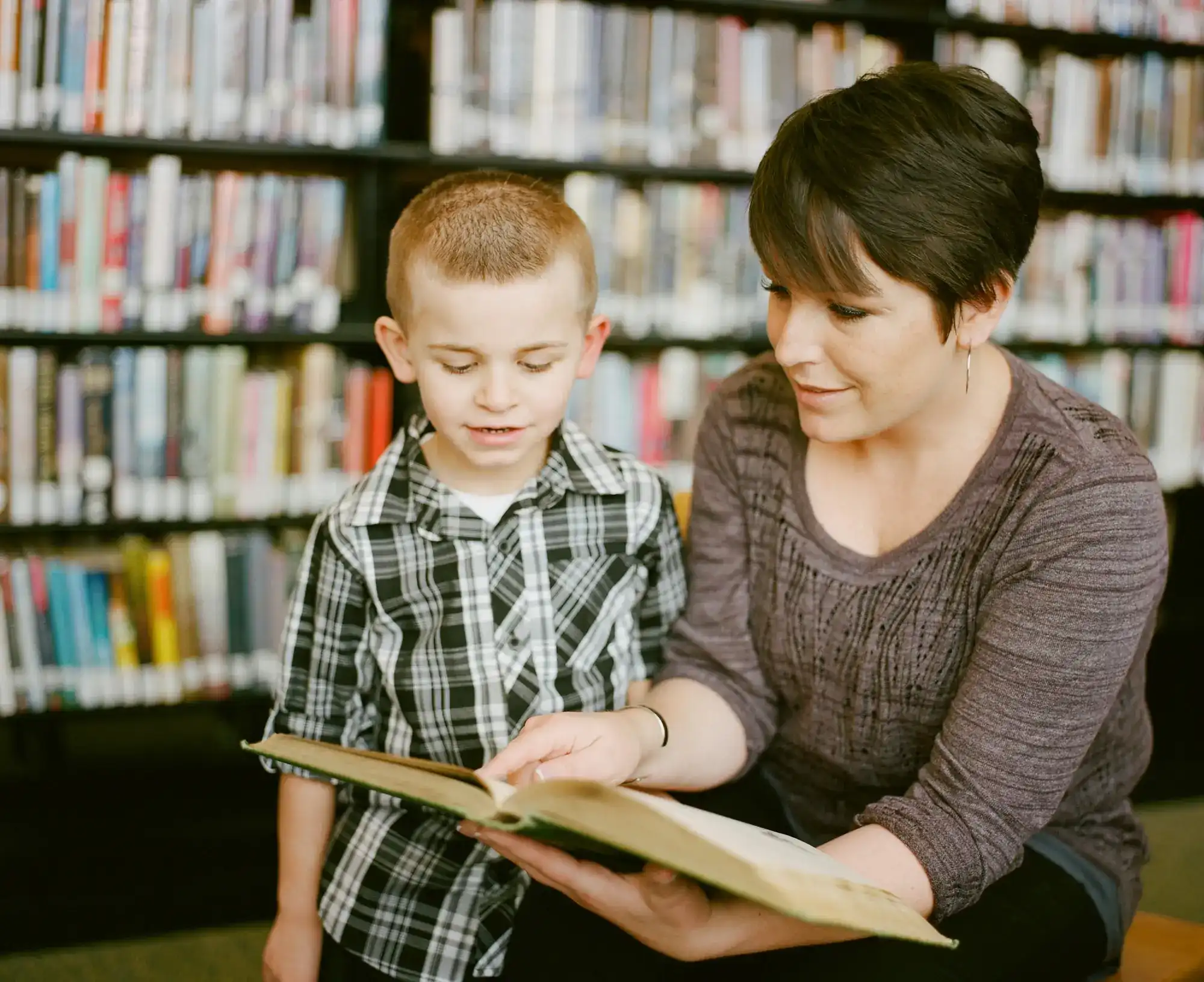
Guessing
“What does it say?” “Cat.” “Look at the letters, what does it say?” “Cat?” The child is guessing from the picture and has not decoded the word.
Ages about 5 to 9 · Phonics and early reading
Phonics teaches how English letters stand for sounds, and how to blend those sounds into a word. We go slowly, one small sound at a time, so reading starts to feel like a skill your child owns.
We check a tutor's fit with early reading before suggesting anyone, and promise no specific credential.
Children who speak other languages at home may know a lot of English words and still find it hard to read them. These patterns come up often.
A child looks at the picture and says a word that fits, rather than reading the letters.
Several letters are known by name but not by the sound they make in a word.
Your child says each sound correctly but cannot join them into a word.
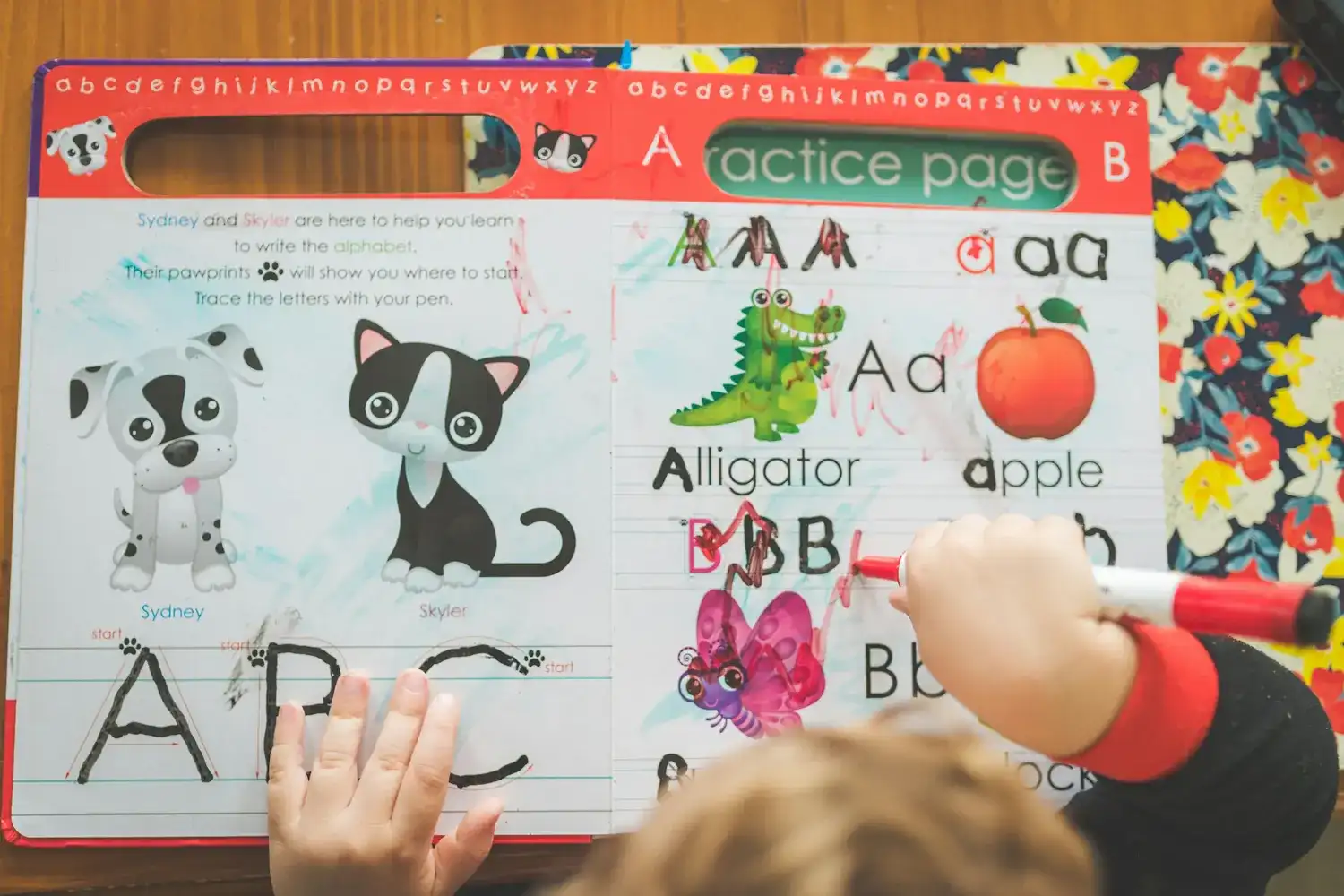
An original illustration of a short blending routine. The child works with sounds, not letter names.
| Word | What the child says | What the tutor does |
|---|---|---|
| sat | s a t, then sat | Points to each letter in turn, then slides a finger under the whole word |
| mat | m a t, then mat | Changes only the first letter, so the child hears that one sound made a new word |
Illustration written for this page. Real lessons use sounds the school or the child is working on, and the pace depends on the child.
These are tutors who teach with Petra Tutors. Being shown here does not mean a tutor is currently available for this service or in your area. We suggest a tutor only after checking your goals, your child's age and the schedule.
Sophia University · Faculty of Liberal Arts
Conversation, EIKEN and primary English
Hannah's gentle, approachable manner helps children who find English difficult become more comfortable step by step.
Sophia University · SPSF
IB English, economics & IELTS/TOEFL/SAT
Tina focuses on the IB, English examinations and essay writing, identifying what to strengthen even when the available preparation time is limited.

Keio University · PEARL
English, beginners, primary to high school
Using journal writing, grammar and pronunciation practice, Dayun helps children who find English difficult express themselves more clearly over time.
Young children learn best in short, varied bursts.
A quick review of the sounds your child already knows.
Say it, see it, write it and find it in a word.
Sound out and blend a few simple words, then a short sentence.
Finish on something your child can already do.
Plain information before you decide.
Our children's English conversation page covers speaking. This page is about reading words.
If your child is brand new to English, our beginner page may be the better start.
We check each tutor's experience with early reading before suggesting them, and we promise no reading level or date.
Looking at letters is not enough; children learn to blend them into sound.
Learning the common sound of each letter: a as in “apple”, s as in “sun”.
Lining up “s-a-t” and reading “sat”.
A habit of looking at the word itself rather than guessing from the image.
Reading a simple word alone gives the motivation for the next step.
Knowing the letter names is not the same as blending their sounds into a word. This strand concentrates on decoding: turning a printed word into sound, one step at a time.
With the tiles s, a and t in a row, the child says /s/ /a/ /t/, not “ess, ay, tee”. This one habit makes blending possible.
The tutor slides a finger under the tiles as the child joins the sounds together: sss-aaa-t, sat. The finger shows that the word is one continuous sound.
Replace s with m and read “mat”. Asking “which sound changed?” trains the child to notice sounds inside words.
Once a few words are secure, they go into a sentence such as “A cat sat.” Real reading of real words builds confidence.
A child who guesses may seem to read well until the pictures disappear.
Moment
A five-year-old sees the word “sat” under a picture of a cat on a mat.
Guessing
“What does it say?” “Cat.” “Look at the letters, what does it say?” “Cat?” The child is guessing from the picture and has not decoded the word.
Decoding
The tutor covers the picture. “Sounds for each letter?” “/s/ /a/ /t/.” “Slide: sss-aaa-t.” The child says “sat” and then looks for the sat on the cat.
A child who can blend sounds can attempt a word they have never seen, which guessing cannot do.
Showing the picture after the word is read confirms meaning without replacing the decoding step.
When a child reads a word by themselves, they know that they have read it, and that builds motivation.
This is an original example written for this page. The tutor chooses words and a pace to suit the child.
| Stage | What is practised | Typical sign of readiness to move on |
|---|---|---|
| 1 | A small set of letter sounds (such as s, a, t, p, i, n) | Says the sound quickly when shown the letter |
| 2 | Blending three-letter words (sat, pin, tap) | Blends without prompting for most words |
| 3 | Changing one sound to make new words | Notices and names which sound changed |
| 4 | First sentences and simple tricky words | Reads a short sentence smoothly |
Tricky words such as “the” and “said” do not follow simple sound rules and are taught as exceptions once the basics are secure.
Phonics is simple to describe and delicate to teach.
Saying /s/ without an added vowel, not “suh”, makes blending easier. The tutor models clean sounds and gently corrects.
If a child can already decode, the tutor moves to longer words or comprehension rather than repeating what is known.
Japanese learners are used to syllables, so splitting a word into single sounds is new. The tutor takes this slowly and with plenty of movement.
If your child finds sounds and letters unusually difficult, a qualified specialist can assess them. A tutor does not diagnose.
A little each day beats a long session once a week.
Use the same letters the tutor used. Say the sounds, not the names.
Place the cards, slide a finger and blend. Then change one letter.
Five minutes of success is worth more than fifteen of struggle.
Matching depends on your child's age, the subject and how your child learns best. Before we suggest anyone we check the following.
Whether a tutor is comfortable with children learning to read, at your child's age.
Whether the tutor suits a short attention span.
Online across the Netherlands, or in person mainly in Amstelveen and Amsterdam, subject to availability.
Short sessions at a time of day when your child is alert.
We start with a short conversation about your child and what is hard at the moment. Then we suggest a tutor and a way of working. Nothing here is a promise of availability.
Your child's age and school year, the subject, and the moment that feels hardest. We do not need your child's schoolwork or any sensitive personal details to start.
If a suitable tutor is available we tell you who we suggest and how the lessons would run. If none is, we say so.
Lessons can be online across the Netherlands. In person lessons are offered mainly in Amstelveen and Amsterdam, depending on tutor availability.
These depend on the tutor, the subject and the format, and we explain them when you get in touch. Our general pricing page has the current overview.
Tell us your child's age and what reading looks like right now. We will explain what is possible and whether a suitable tutor is available.
These are questions families often ask before they get in touch.
Phonics teaches the link between English sounds and the letters that write them, and how to blend sounds into words. It is one way to learn to read.
The beginner page is for children new to English in general. This page is about reading: matching sounds to letters and blending them into words.
Possibly. A child can speak well and still find reading words hard. We start by listening to your child read a few words, then decide.
We do not claim a specific phonics qualification. We check each tutor's experience with early reading before suggesting them.
In person lessons are offered mainly in Amstelveen and Amsterdam, depending on tutor availability. Online lessons are possible across the Netherlands.
For reading, letter sounds are more useful at the beginning. The names can come alongside, and the tutor explains which is being used so that you can use the same one at home.
Tell the tutor which scheme and terms the school uses. The lessons can use the same sound names so that your child is not confused by two sets.
It is a key part, but comprehension, vocabulary and reading practice matter too. Once decoding is secure, the tutor moves toward understanding what is read.
It depends on the child and how often they practise. We avoid promising a timeline. A tutor can tell you what is realistic after seeing your child read.